
Graphic design the new basics is a teaching framework that moves beyond traditional elements like color and form to explore concepts like pattern, texture, transparency, layers, and modularity. Rather than treating design as a fixed set of rules, this approach invites you to play with visual building blocks that can transform how you see, create, and communicate through art.
For anyone exploring creative expression as a path to wellbeing, this framework offers something valuable: permission to experiment without needing formal training. You don’t need expensive software or years of art school to work with these principles. Simple materials like paper, scissors, paint, or even digital tools you already own can help you explore how shapes repeat, how colors overlap, or how layers create depth and meaning.
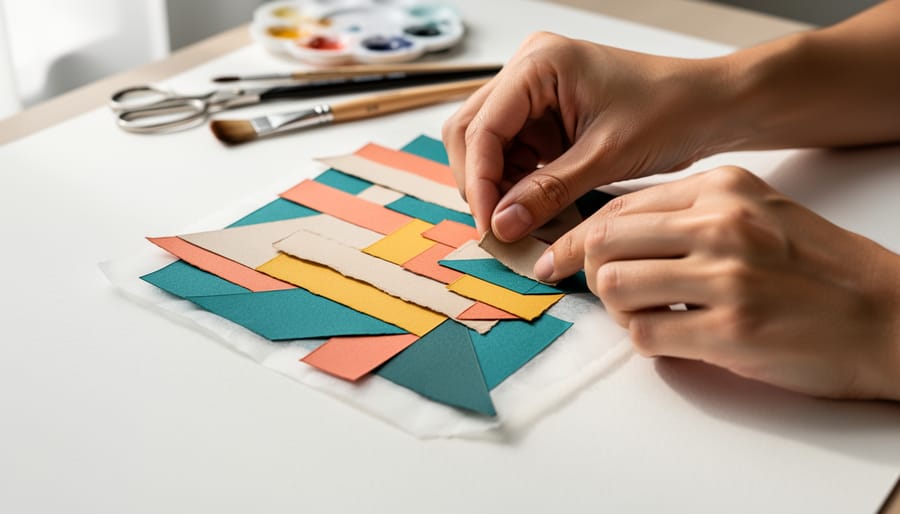
Traditional design education often focused on mastery and technical perfection. The new basics shift that focus toward exploration and personal discovery. When you arrange torn paper scraps to create a pattern, or layer transparent tissue to see new colors emerge, you’re not just making art. You’re engaging in a mindful practice that connects visual problem-solving with emotional expression, similar to the principles found in art therapy and mindfulness.
This contemporary approach acknowledges that design thinking supports mental health and self-awareness. Working with grids can create a sense of order during chaos. Playing with scale and rhythm can help you express feelings that words can’t capture. These aren’t abstract academic exercises. They’re accessible tools that translate directly into therapeutic creative work, helping you build visual literacy while processing emotions and experiences in a low-pressure, judgment-free way.
What Graphic Design The New Basics Really Means
The ‘new basics’ approach treats design fundamentals not as fixed rules to memorize, but as tools for visual thinking and personal expression. Unlike traditional design education, which often emphasizes mastery of formal techniques, adherence to established conventions, and commercial application, this framework prioritizes conceptual understanding, experimentation, and finding your own voice through visual language. It’s less about learning the “right” way to use color or compose a layout, and more about understanding why these elements affect us emotionally and how they can serve your unique creative intentions.
This shift matters because it makes design thinking accessible to everyone, not just those pursuing professional careers in graphic design. When you approach visual fundamentals through exploration rather than prescription, you’re free to use them in ways that serve personal healing, storytelling, or community connection. A person working through difficult emotions in an art journal doesn’t need perfect typography or professionally-balanced compositions, they need to understand how visual weight, contrast, and color relationships can help them articulate what they’re feeling.
What makes this approach particularly valuable in therapeutic contexts is its emphasis on process and meaning over polish. Traditional design training often asks, “Does this look professional?” The new basics ask, “What are you trying to communicate, and do these visual choices support that intention?” That question applies whether you’re creating a poster, exploring emotions through collage, or simply arranging objects in a way that feels meaningful to you. It acknowledges that effective visual communication isn’t about following someone else’s aesthetic standards, it’s about understanding how visual elements work so you can use them intentionally.
Core Principles That Support Creative and Therapeutic Practice
Visual Language as Emotional Communication
When you’re navigating grief, anxiety, or complex emotions that resist verbal expression, visual elements offer a parallel language. Color intensity can convey emotional weight that a clinical description flattens, a deep indigo holds a different truth than saying “I feel sad.” Form and line quality carry visceral meaning too: jagged edges versus fluid curves, tight compositions versus expansive negative space. These aren’t decorative choices; they’re semantic ones.
In therapeutic work, understanding how design elements function gives you vocabulary without requiring words. A client working through trauma might layer textures until the surface feels as chaotic as their internal state, then gradually simplify, the visual process itself becomes the conversation. The shape of a form can express containment or explosion, safety or threat, in ways that bypass our verbal defenses.
This matters because emotional communication often fails at the translation point between feeling and language. We flatten nuanced inner experiences into inadequate phrases (“I’m stressed,” “I’m okay”) because we lack better tools. Design fundamentals provide those tools. When you recognize that contrast creates tension, repetition builds rhythm, and scale shifts significance, you gain conscious control over emotional expression. You’re not randomly choosing red or accidentally drawing a circle, you’re selecting visual elements that match your internal experience with precision words can’t reach.
Experimentation Over Perfection
The ‘new basics’ philosophy flips a familiar script in design education: instead of mastering rules before you’re allowed to break them, you dive into making and discovering what works through trial and error. This approach treats mistakes as information rather than failures, giving you permission to explore color combinations that clash, layer textures messily, or arrange elements in ways that feel unstable. The point isn’t to create gallery-ready work but to learn through doing, noticing what resonates and what doesn’t without the pressure of a polished final piece.
This experimental mindset mirrors what makes art therapy supports healing so effective: the therapeutic value lives in the process, not the product. When you’re layering paint to explore anger or arranging torn magazine images to process grief, technical perfection doesn’t matter. What matters is what you discover about yourself through the act of making. The ‘new basics’ approach legitimizes this messy, iterative work as valid design thinking, removing the anxiety that your creative expression needs to look “right” to be worthwhile.
For anyone using visual work in their healing journey, this permission to experiment changes everything. You can test how different typefaces carry different emotional weight, play with scale to express overwhelming feelings, or combine incompatible colors because that’s exactly what your inner experience feels like. The framework says your instincts and personal voice matter more than following established aesthetic rules, which is precisely the kind of creative freedom that opens pathways to self-awareness and emotional release.
Applying Design Thinking to Personal Healing Work
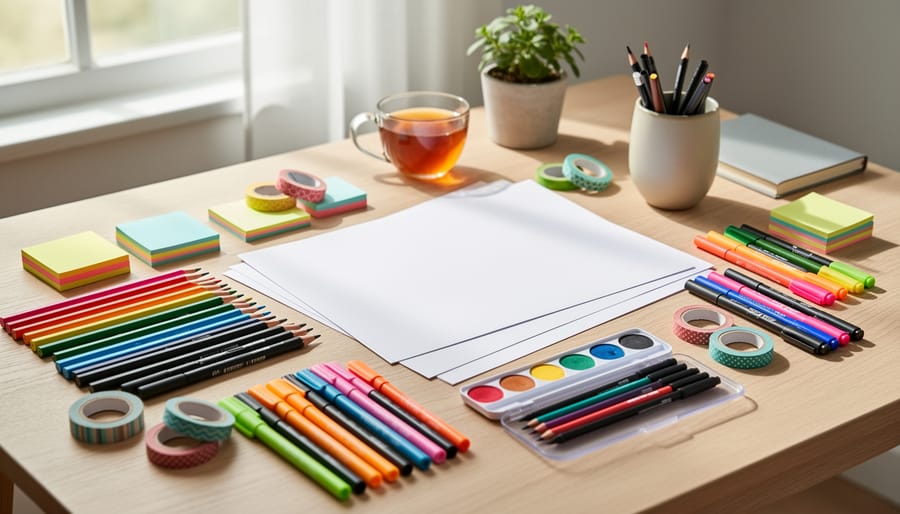
You don’t need a design degree or fancy software to bring design thinking into your healing practice. Start with what you have: a notebook, colored pencils, magazine clippings, or even a free digital tool. The goal isn’t to create gallery-worthy pieces but to use visual structure as a way to process emotions and build self-awareness.
Try creating a weekly visual journal where you assign different colors to different emotional states. Instead of writing “I felt anxious today,” use color blocks, shapes, and placement to show that feeling. Place a jagged red shape at the top of the page if anxiety felt overwhelming, or a small blue circle in the corner if calm moments were brief. Over time, you’ll notice patterns in your emotional landscape that words alone might miss.
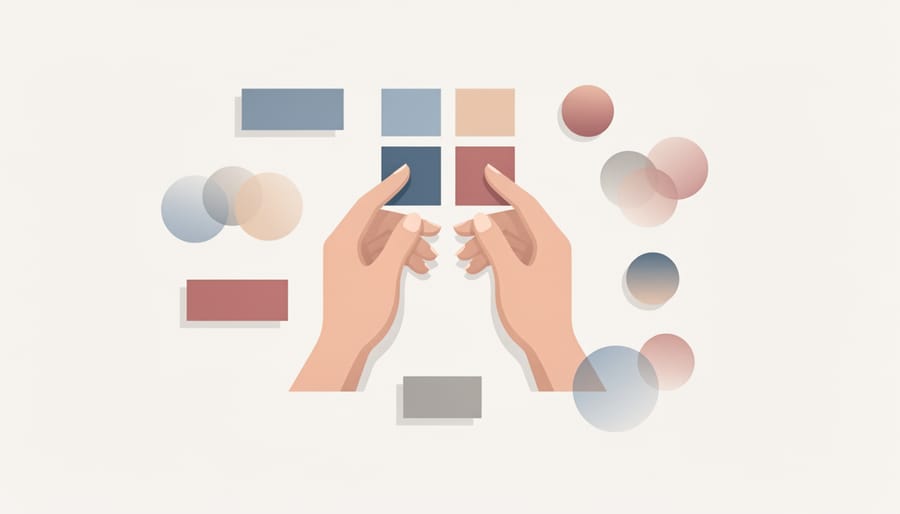
Composition exercises offer another accessible entry point. Divide a page into quarters and fill each section with a different texture, pattern, or material that represents parts of your current experience. Tear magazine pages for one quarter, use crosshatching in another, leave one blank, fill the last with overlapping circles. The act of deciding what goes where and how elements interact mirrors the work of organizing internal experiences.
Typography can become a therapeutic tool too. Write a difficult emotion in tiny letters at the edge of a page, or make a word you want to embody fill an entire sheet. Change the size, weight, and placement of words to explore how visual presentation affects meaning and feeling. This technique works especially well when you’re struggling to articulate something verbally.
If you’re curious about digital approaches, exploring why Figma works for therapeutic practice can open new possibilities for those who prefer working on screens. Digital tools let you experiment without fear of waste, undoing and rearranging elements until they feel right.
For those wanting more structured guidance, graphic design tutorials adapted for healing work can provide frameworks while keeping the focus on personal expression rather than professional outcomes.
The key is consistency over complexity. Spend ten minutes a day exploring one design principle through whatever materials feel comfortable. Notice what happens when you work with contrast, repetition, or negative space. These aren’t just design concepts, they’re ways of understanding how we organize our inner worlds and communicate them outwardly.
Where to Explore Design Basics in 2026
You don’t need to travel to Barcelona or New York to explore design fundamentals, though festivals like OFFF Barcelona (April 16-18, 2026) and Typographics (June 26-27, 2026) offer inspiring glimpses into contemporary visual creativity. OFFF Barcelona brings together designers, artists, developers, and thinkers for a leading festival celebrating visual innovation, while Typographics in New York City dedicates itself to typography, type design, and visual communication through talks, workshops, exhibitions, and community events. These gatherings showcase the possibilities of design thinking, but they’re not prerequisites for learning.
Your local library likely offers access to platforms like Skillshare, Domestika, or LinkedIn Learning at no cost, many featuring courses specifically on design basics and visual expression. YouTube channels from educators and practicing designers provide step-by-step tutorials on color theory, composition, and typography without requiring subscriptions. Free tools like Canva include built-in design courses alongside their software, teaching principles as you create. Community colleges often run affordable evening workshops in graphic design fundamentals, and many art therapy centers incorporate design thinking into their programming.
Online communities matter as much as formal courses. Reddit’s design subreddits, Discord servers for creative learners, and Instagram accounts dedicated to design education offer daily inspiration and feedback. When you’re ready to choose an online program prioritize those emphasizing experimentation and personal voice over technical perfection, this aligns with both the ‘new basics’ philosophy and therapeutic creative practice.
The most important resource costs nothing: your willingness to experiment. A notebook, some markers, and permission to play with visual ideas will teach you more about design fundamentals than passive consumption of any course.
Common Questions About Design Basics and Creative Expression

Do I really need years of art school or natural drawing ability to benefit from understanding design principles? Absolutely not. The “new basics” approach treats design literacy the same way we treat reading, a learnable skill that deepens how you make and share meaning, not an exclusive talent reserved for professionals. Many people drawn to art therapy or creative healing work feel blocked by this myth of needing inherent talent, but design thinking simply gives you a vocabulary for the visual choices you’re already making when you arrange photos on your wall, choose what to wear, or doodle in the margins of a notebook.
Is learning design basics only useful for people who want to become graphic designers?
Not at all. Understanding how visual elements work together helps anyone communicate more effectively, whether you’re creating a vision board, documenting your healing journey, organizing personal projects, or simply wanting to express yourself more clearly through images.
How does understanding design principles actually support mental health and healing?
Design literacy expands your expressive toolkit, you gain more ways to externalize emotions, recognize patterns, and create order when internal experiences feel chaotic. This mirrors how art therapy works: the process of making visible what’s invisible inside creates distance, perspective, and often relief.
What if I only have basic supplies like printer paper and colored pencils?
The principles work with whatever you have. Contrast exists between light and heavy pencil pressure, repetition appears in doodles on notebook paper, and composition happens when you decide where to place elements on any surface, expensive materials add nothing to your capacity for thoughtful visual choices.
Will exploring different graphic design styles make my personal creative work feel too formal or structured?
The “new basics” approach encourages you to understand principles so you can play with them intentionally, not follow them rigidly. Knowing why certain arrangements feel balanced or dynamic gives you freedom to break those patterns meaningfully rather than randomly.
The connection between design understanding and therapeutic benefit becomes clearer when you consider that both fields value the same thing: authentic self-expression through intentional choices. When someone in an art therapy session learns that placing dark shapes at the bottom of a composition creates visual weight and grounding, they’re not just learning a design rule, they’re discovering a tool for communicating how they want to feel. The formal knowledge simply names and reinforces what their intuition might already sense.
People working with limited resources often worry they can’t engage with design principles meaningfully, but restriction breeds creativity in powerful ways. A single black marker on white paper teaches contrast and negative space more clearly than a fully stocked art supply store. You learn to see relationships between elements, how size, position, and spacing create meaning, which matters far more than the materials themselves. Every graphic design styles you might explore, from minimalist to maximalist approaches, ultimately relies on the same fundamental relationships that work with crayon stubs as well as professional software.
Understanding graphic design basics isn’t about becoming a professional designer or mastering complex software. It’s about recognizing that you already possess the capacity for visual expression, and these foundational principles simply expand your vocabulary for communicating what lives inside you. The ‘new basics’ approach removes the gatekeeping from design education, insisting that experimentation, personal voice, and emotional honesty matter far more than technical perfection or adherence to rigid rules.
This democratization aligns perfectly with what makes art therapy so powerful: the belief that creative expression belongs to everyone, not just those with formal training or natural talent. When you understand how color carries emotion, how composition guides the eye, or how texture adds depth to your work, you gain more tools to translate inner experiences into visible form. These aren’t rules to follow but possibilities to explore, ways to make your creative practice richer and more intentional.
The journey itself holds the value. Whether you’re working through difficult emotions in a therapy session, keeping a visual journal for self-reflection, or simply exploring what happens when you combine unexpected elements, each experiment teaches you something about how you see and communicate. Design thinking doesn’t require expensive materials, prestigious workshops, or years of study. It asks only that you stay curious, trust your instincts, and remember that your perspective matters exactly as it is.
