


Your heartbeat is racing. Your thoughts won’t slow down. Your chest feels tight, and you need relief right now.
Music can help, and we’re not talking about some vague wellness trend. Scientific research in 2026 continues to confirm what many of us already know from experience: the right sounds can physically change your body’s stress response. When you listen to music with a slow tempo (around 60 beats per minute or less), your heart rate often syncs with the rhythm. Your breathing naturally slows. The cortisol flooding your system starts to decrease.
This isn’t about replacing therapy or medication if you need those supports. Think of calming music as another accessible tool in your anxiety management toolkit, one that costs nothing and works anywhere. You can use it during a panic attack, before a stressful meeting, or as part of your nightly wind-down routine.
The challenge? Not all “relaxing” music works the same way for everyone. What soothes one person might irritate another. Some people find classical piano pieces grounding, while others need nature sounds, binaural beats, or ambient electronic music. Your cultural background, personal memories, and even your current mood all influence what will actually calm your nervous system.
This guide will help you understand why music affects anxiety, what types tend to work best, and how to build your own personalized collection of go-to tracks. We’ll also explore when making music yourself might offer even deeper relief than just listening.
What Happens in Your Body When You Listen to Calming Music
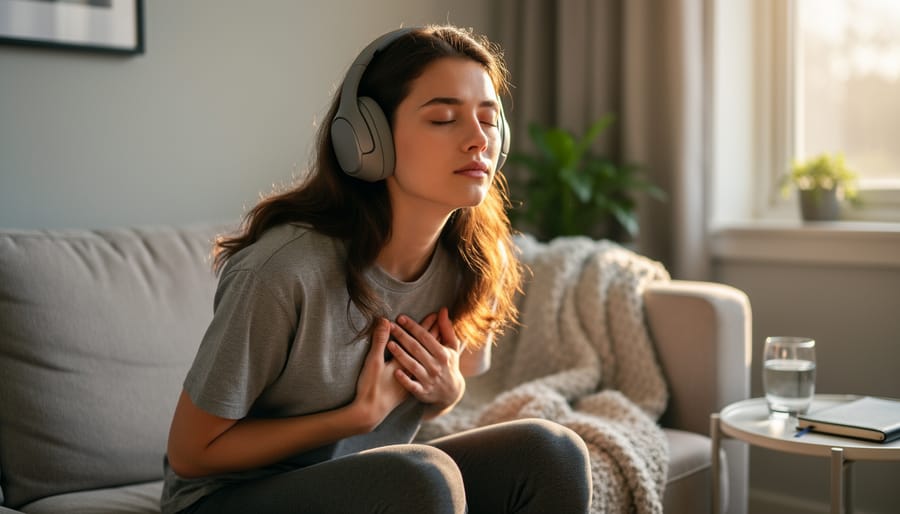
When you press play on a calming track, your body doesn’t just hear it, it responds. Within seconds, your nervous system begins to shift gears. Slow, repetitive rhythms and gentle melodies signal to your brain that the current moment is safe, triggering a cascade of changes that work directly against anxiety’s physical grip.
Your heart rate often syncs with the tempo of what you’re hearing. A song with 60 to 80 beats per minute can nudge your pulse toward a resting state, slowing the frantic drumbeat that anxiety brings. At the same time, research shows that music lowers stress hormones like cortisol, the chemical messenger your body releases when it thinks you’re under threat. Less cortisol means your muscles can unclench, your breathing can deepen, and that tight knot in your chest starts to loosen.
Beyond the biochemistry, calming music also shifts your attention. Anxiety tends to trap your thoughts in loops, replaying worst-case scenarios or fixating on physical sensations. Music offers something else to focus on, a gentle anchor that pulls you out of your head and into the present. It’s not distraction in the shallow sense, it’s redirection toward something that soothes rather than agitates.
Your breathing changes too. Many people unconsciously match their breath to musical phrases, which can slow and regularize the shallow, rapid breathing that fuels panic. The body and the sound become partners in calming, working together in a way that feels less like effort and more like relief.
Types of Calming Music That Actually Help With Anxiety
Music With Meaning: When Lyrics Help or Hurt
Lyrics can anchor you or unravel you, depending on what your brain needs in that moment. When anxiety is riding high, words that name your fears or echo dark feelings might intensify the spiral rather than soothe it. A breakup song that once felt cathartic can suddenly feel like it’s written about your life falling apart right now.
Instrumental music sidesteps this entirely. Without words, your mind has less to latch onto and ruminate over. You’re not parsing meaning or reliving memories tied to specific phrases. That makes ambient tracks, classical pieces, or wordless lo-fi beats safer bets when you need to quiet racing thoughts.
But lyrics aren’t always the enemy. Songs with gentle, affirming messages or familiar childhood lullabies can feel like a hand on your shoulder. The trick is knowing yourself: does this song bring comfort, or does it give your anxiety more material to work with? If you’re unsure, notice how you feel two minutes in. Your body usually knows before your mind catches up.

Creating Your Personal Anxiety Playlist
Start with three core playlists instead of one catch-all mix. Build a “gentle background” list for low-level anxiety during work or daily tasks, think instrumental tracks under 80 BPM with minimal variation. Your second playlist should contain slightly more engaging music for active listening when you need to redirect spiraling thoughts. The third is your emergency toolkit: familiar songs that have reliably calmed you during past episodes.
Keep each playlist short at first, around 20-30 minutes. You’re more likely to actually use them if they feel manageable. Add tracks gradually as you discover what works in real situations, not what sounds theoretically calming.
Test your playlists during calm moments before you need them. Anxious brains don’t process new stimuli well, so familiar sounds work better mid-crisis. If a song makes you feel worse or carries a painful memory, delete it immediately without guilt.
Consider the context where you’ll listen. Headphones create an immersive cocoon that helps some people, while others need to stay aware of their surroundings and prefer speakers at low volume. Match your playlist length to the situation too, a 10-minute calming track won’t help if you’re facing a two-hour flight.
Label your playlists with situational names like “Morning Anxiety” or “Can’t Sleep” rather than vague titles. You want to grab the right one quickly when your hands are shaking and decision-making feels impossible.
Your playlist will evolve. What soothes you this month might grate on your nerves next season, and that’s completely normal.
How to Use Calming Music as Part of Your Anxiety Management Toolkit
Start where you are. You don’t need a perfect system or hours of free time to make calming music work for you. The key is building small, realistic habits that meet you in the moments when anxiety shows up.
Think of music as one reliable tool in your kit, ready to pull out when you need it. The difference between music that helps and music that sits unused in a playlist comes down to preparation and practice. When anxiety hits hard, you won’t have the bandwidth to curate the perfect soundtrack. Do that work now, during calmer moments, so the support is there when you need it.
Keep a dedicated anxiety playlist on your phone, ready to play with one tap. Stock it with tracks you’ve tested during low-stakes situations. Notice which songs genuinely settle your nervous system versus which ones just sound nice. Your body will tell you the difference.
For work stress, use music as a buffer between tasks. When you feel tension building in your shoulders or your thoughts speeding up, step away for five minutes with headphones. Let instrumental tracks create a pocket of calm before you re-engage. This isn’t procrastination; it’s actively choosing to de-stress effectively before you hit overload.
When anxiety spikes into something more acute, follow this sequence:
- Notice the physical signs, racing heart, tight chest, shallow breathing, without judgment.
- Put on your pre-selected calming music through headphones if possible, creating an auditory boundary.
- Match your breath to the rhythm: breathe in for four counts, out for six, letting the music guide the pace.
- Focus on one instrument or sound layer, using it as an anchor when your thoughts spiral.
- Stay with it for at least three full minutes, even if the relief isn’t immediate.
This combination of music and intentional breathing interrupts the anxiety loop more effectively than either tool alone.
For sleep anxiety, set a wind-down routine. Start your playlist 30 minutes before bed, not when you’re already lying awake and frustrated. Pair it with dim lighting and a consistent bedtime. Your brain will start associating the music with the transition toward rest.
Preventive self-care means using music before anxiety builds. Play calming tracks during your morning routine, on your commute, or while cooking dinner. These small deposits into your nervous system’s regulation account make the withdrawals during stressful moments easier to handle.
The goal isn’t to never feel anxious. It’s to have accessible strategies that actually work when you need them.
Making Music for Mental Health: The Creative Side of Healing
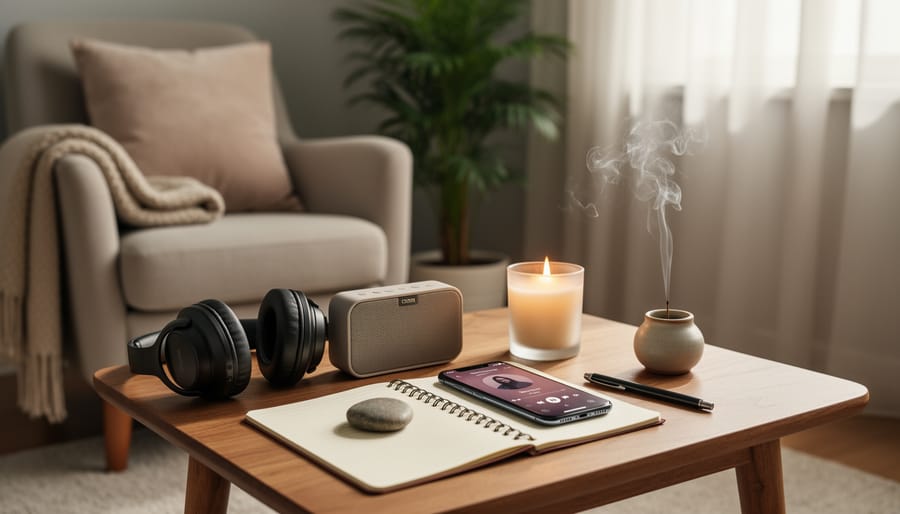
You don’t have to be a musician to benefit from making music. Humming a melody in the shower, tapping out a rhythm on your desk, or experimenting with a free music app can all activate the same expressive, anxiety-relieving pathways that painting or journaling do. Creating sound gives your anxious thoughts somewhere else to go. When you’re focused on layering a beat or finding the right note, your mind shifts from rumination to creation.
Music production and composition work as expressive therapy in ways similar to visual art therapy. The act of building something from nothing, choosing sounds that match your emotional state, layering textures until they feel right, these aren’t distractions from anxiety. They’re ways of processing it. You’re translating what’s happening inside you into something outside you, which makes overwhelming feelings more manageable. No training required, no expensive equipment necessary. Your phone probably has everything you need to start.
This creative aspect of music for mental health is getting more recognition in 2026. Music producers themselves, who spend hours crafting sound, face their own mental health challenges, isolation, perfectionism, pressure to constantly create. Programs like Unmute Yourself (vol2), a 6-session mental health program for music producers grounded in REBT and launching this year in collaboration with AltMindShift, reflect growing awareness that the people creating music need support too. The program runs over three months, addressing the specific pressures producers face.
Whether you’re humming to calm down or building full tracks as therapy, making music meets you where you are. It doesn’t demand perfection. It asks only that you show up and let sound give shape to what words can’t quite capture.
When Music Isn’t Enough: Combining Sound With Other Therapies
Music can ease anxiety in the moment, but it isn’t a replacement for professional support when symptoms persist or intensify. If you’re finding that playlists alone aren’t cutting through the mental fog, that’s a signal to bring in other therapeutic approaches.
Calming music works brilliantly alongside other therapies. Pairing soundscapes with art therapy mindfulness practices, for instance, creates a multi-sensory grounding experience. You might sketch or paint while listening to ambient music, letting both the sound and the creative process settle your nervous system. This layered approach taps into different pathways for emotional regulation, which can be especially helpful when one method alone doesn’t quite reach the root of your anxiety.
Talk therapy also complements music listening. A therapist can help you identify anxiety triggers and patterns, while your curated playlists become practical tools you use between sessions. Some people find music particularly helpful for specific struggles, like cope with homesickness or coping with losswhere sound evokes memory and emotion in ways words sometimes can’t capture.
Mindfulness meditation and breathwork naturally pair with calming music too. The rhythm of a slow piece can guide your breathing, while nature sounds create an anchor for wandering thoughts during meditation. Think of music as the supportive background that makes other practices easier to stick with, not as a standalone cure-all.
Finding what calms your anxiety won’t look the same as someone else’s playlist, and that’s exactly how it should be. Some days a simple nature soundscape will settle your nervous system. Other days you’ll need something more structured, or maybe you’ll find relief in creating sounds yourself rather than listening. The point isn’t to get it perfect, it’s to stay curious and compassionate with yourself as you explore what works.
Healing from anxiety isn’t a straight line. You’ll have setbacks, breakthroughs, quiet progress you barely notice, and moments when nothing seems to help. Music can be a gentle companion through all of it, but it doesn’t have to work alone. Art therapy, talk therapy, mindfulness practices, and other creative outlets can all support you in different ways at different times.
If you’re struggling, remember that accessible support exists. Whether through community programs, sliding-scale therapy, or creative healing modalities that meet you where you are, you don’t have to navigate this alone. Start with one song, one breath, one kind choice for yourself. That’s enough for today.
