
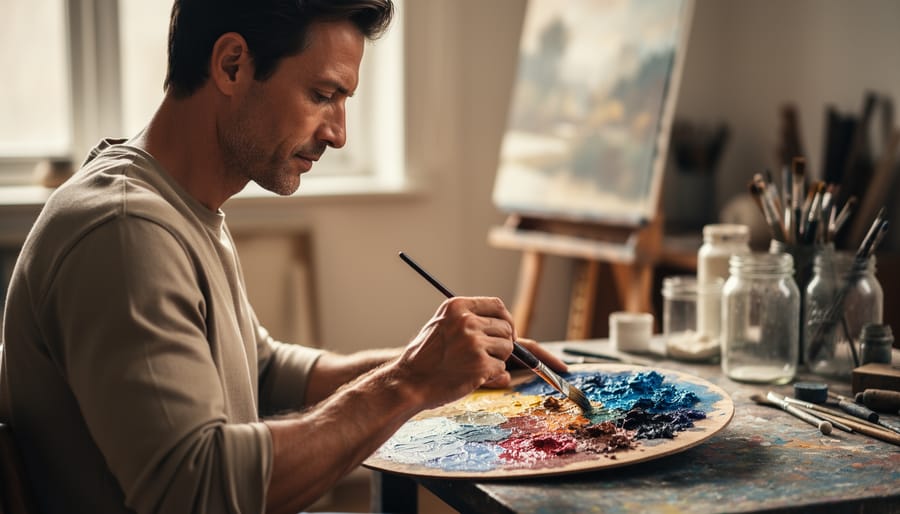
Men’s mental health awareness addresses a critical gap: while men face significant mental health challenges, they’re far less likely to seek help or engage with traditional therapy. Cultural expectations around masculinity, discomfort with emotional vulnerability, and the talk-based nature of conventional counseling create real barriers that keep many men suffering in silence. Art therapy offers a powerful alternative because it doesn’t require you to sit across from someone and explain your feelings. Instead, you work through emotions and stress using creative expression, whether that’s painting, sculpting, drawing, or other hands-on activities.
This matters because mental health advocacy has shown us that one-size-fits-all approaches simply don’t work for everyone. Men dealing with depression, anxiety, PTSD, or substance use often respond better to action-oriented therapies that feel less like “opening up” and more like doing something productive. The creative process becomes the conversation. You can explore difficult emotions without having to name them out loud first.
If you’ve been hesitant about therapy because traditional methods feel uncomfortable or ineffective, understanding how art therapy works and where to access it in Canada could be the shift you need. This guide breaks down why men face unique mental health challenges, how art therapy addresses those specific barriers, and concrete steps to find affordable, accessible services that fit your life.
The Silent Struggle: Understanding Men’s Mental Health Challenges
Men carry their pain differently, and too often, they carry it alone. Cultural messaging from an early age teaches many men that emotional openness equals weakness, that “real” strength means handling everything yourself, and that admitting you’re struggling is something to avoid. These unwritten rules create a silent crisis where men experience serious mental health challenges but feel they can’t talk about them.
The consequences of this silence run deep. Men consistently access mental health services at much lower rates than women, not because they experience fewer problems but because seeking help conflicts with everything they’ve been taught about what it means to be a man. When mental health issues go untreated, they don’t just disappear. They compound, manifesting as anger, irritability, withdrawal, and risk-taking behaviors that men and those around them may not recognize as distress signals.
The gap between need and help-seeking becomes starkest when looking at suicide outcomes. Men die by suicide at dramatically higher rates than women across demographics, yet they remain far less likely to reach out for professional support before reaching a crisis point. This pattern isn’t about men being inherently less capable of seeking help. It reflects decades of social conditioning that punishes vulnerability and rewards emotional suppression.
Work environments and social circles often reinforce these patterns. Men learn to frame their struggles through acceptable lenses, being stressed rather than anxious, being tired rather than depressed, needing to blow off steam rather than needing to process difficult emotions. These reframings let men acknowledge something’s wrong without violating the unspoken code against emotional vulnerability.
The problem isn’t that men don’t want help. It’s that traditional pathways to mental health support require exactly what many men have been trained to avoid: sitting down with another person and talking openly about feelings, fears, and struggles. This creates a need for alternative approaches that work with how many men naturally process their experiences rather than against it.
Why Traditional Therapy Can Feel Like a Poor Fit for Many Men
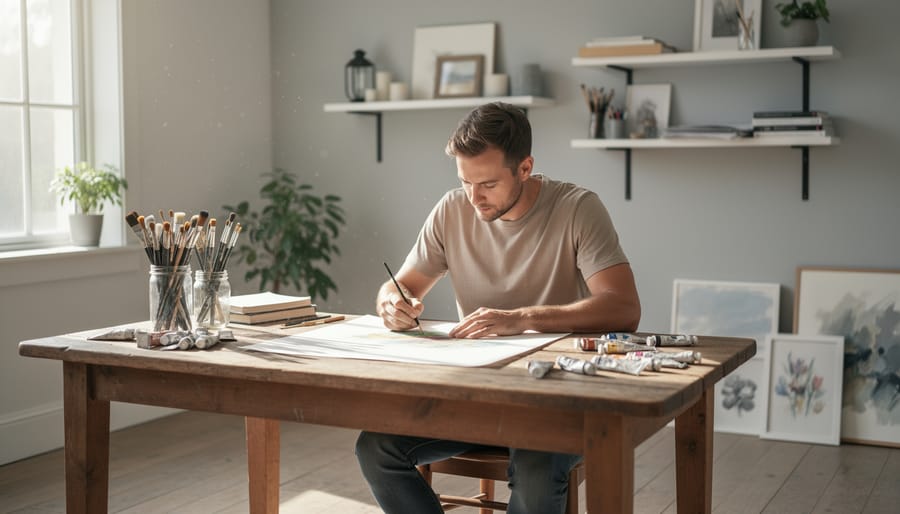
Walk into most therapist’s offices, and you’ll find a setup designed for conversation: two chairs facing each other, soft lighting, and an invitation to talk about your feelings. For a lot of men, this environment triggers every uncomfortable message they’ve absorbed since childhood about what it means to be masculine.
The barriers aren’t about men being inherently less emotional or less willing to address their mental health. They’re learned responses to decades of cultural conditioning. From early age, many men hear that being strong means handling problems on your own, that expressing vulnerability is weakness, and that real men don’t need help. These messages don’t vanish just because someone decides they need support.
Talk therapy demands exactly what many men find hardest: sitting still, making direct eye contact, and discussing feelings they may not have words for. When a therapist asks “How does that make you feel?” some men genuinely struggle to answer, not because the emotions aren’t there, but because they’ve spent years pushing them aside or channeling them into anger, the one emotion that often feels socially acceptable for men to express.
The emphasis on verbal disclosure creates another hurdle. Many men are more comfortable doing than discussing, solving rather than exploring. They want to know what the problem is and how to fix it. Traditional therapy’s open-ended conversations can feel aimless or frustrating, like being asked to navigate without a map.
There’s also the practical fear of judgment. Men worry about appearing weak or unstable, especially if they work in male-dominated fields where any admission of struggle might affect how they’re perceived by colleagues or supervisors. The prospect of sitting across from someone and admitting you’re not coping feels like confirming every fear about inadequacy.
These cultural barriers aren’t excuses, they’re real obstacles that deserve alternatives, not dismissal. When the standard approach doesn’t fit, the answer isn’t to force it. It’s to find methods that meet people where they are.
How Art Therapy Works Differently
The Action-Oriented Appeal
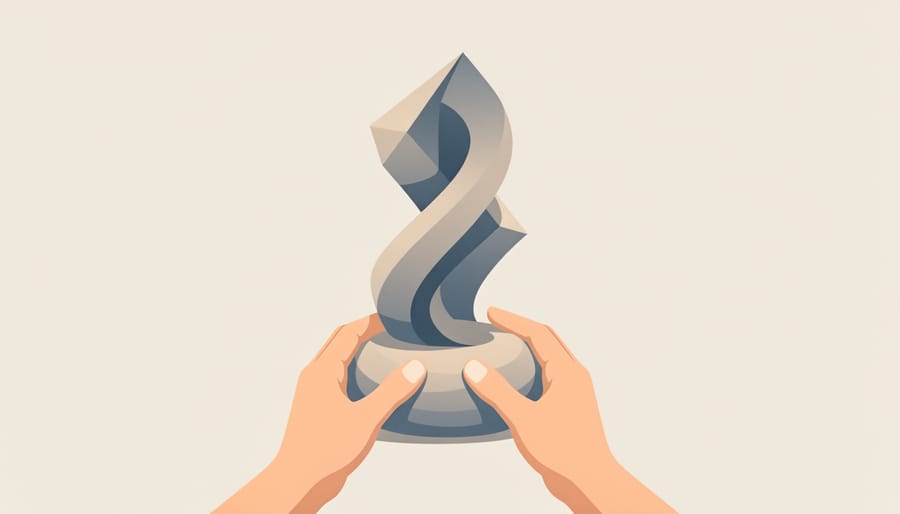
Many men feel more comfortable expressing themselves through action than through words. Art therapy taps into this preference by offering something concrete to do with your hands rather than sitting face-to-face discussing feelings. When you’re shaping clay, mixing colors, or arranging materials, you’re actively working through emotions instead of just talking about them.
This hands-on approach gives you a sense of control during the therapeutic process. You decide what to create, which materials to use, and how to proceed. There’s no pressure to perform emotionally or say the right thing. You can see your progress taking shape in front of you, which many men find more satisfying than abstract conversations about feelings.
The physical engagement also makes sessions feel less vulnerable. You’re focused on the creative task, which takes pressure off direct eye contact and emotional disclosure. Your therapist works alongside you, observing and occasionally asking questions about your art, but the process itself does much of the work. This indirect approach often allows deeper issues to surface naturally without forcing uncomfortable conversations.
Expressing Without Words
For men who’ve spent a lifetime hearing that they should “man up” or “get over it,” the expectation to sit down and talk through feelings can feel like being asked to speak a foreign language. Art therapy sidesteps this pressure entirely. When you’re mixing colours, shaping clay, or arranging images in a collage, you’re communicating without needing to find the right words or explain what something means.
The creative process itself becomes the conversation. A man struggling with anger after a workplace injury might tear paper aggressively, discovering through the physical act what talking about it never revealed. Someone dealing with grief might choose dark colours instinctively, expressing something true before he even recognizes what he’s feeling. There’s no therapist asking “and how does that make you feel?” because the art is already showing it.
This matters especially for men who’ve learned to suppress or ignore their emotional responses. Creating something tangible provides a safe distance. You’re working with materials, not exposing yourself directly. That buffer makes it possible to explore difficult territory without the vulnerability that comes with saying “I’m scared” or “I feel hopeless” out loud. The art holds what you’re not ready to voice yet.
Common Mental Health Issues Art Therapy Addresses in Men
Depression and Low Mood
Depression doesn’t always look like sadness in men. Instead of withdrawing or crying, you might find yourself snapping at people over small things, taking unnecessary risks, or working yourself into the ground. Some men throw themselves into their jobs or the gym, others drink more than usual or pick fights. These aren’t character flaws, they’re often how depression shows up when you’ve spent a lifetime learning that feeling low isn’t something you’re supposed to admit.
Art therapy works with these realities rather than against them. When you’re creating something with your hands, you’re not being asked to sit still and talk about feelings you can’t name or don’t want to examine directly. The clay you’re shaping, the painting taking form, the collage you’re assembling, these become containers for what’s going on inside without requiring you to perform sadness in ways that feel foreign or uncomfortable. You might discover anger in the force of your brushstrokes, exhaustion in muted colours, or restlessness in chaotic compositions. The art holds it so you don’t have to explain it.
Anxiety and Stress
Workplace demands, financial pressures, and the constant push to perform create a particular kind of anxiety that many men find hard to shake. When your worth feels tied to productivity and provision, stress stops being something you have and becomes something you are. The cultural expectation that men should handle pressure without showing strain makes it even harder to admit when anxiety takes over.
Art therapy offers a different way to process this tension. Creating art requires you to slow down and focus on the present moment, which interrupts the cycle of worry about future deadlines or past failures. The repetitive motions of drawing, painting, or sculpting can calm an overactive mind in ways that talking sometimes can’t. Men often report that working with their hands provides immediate relief from the mental noise that keeps them up at night, functioning as one of several effective coping mechanisms for stress that don’t require verbal processing.
Trauma and PTSD
Traumatic experiences leave marks that go deeper than words can reach. For men working in construction, emergency services, policing, or the military, fields where Canadian men are heavily represented, trauma often accumulates quietly. A workplace accident that killed a colleague. Responding to scenes of violence. Combat deployment. These experiences don’t always fit neatly into conversation, and for many men, talking about them feels like reopening wounds that never properly closed.
Art therapy offers a different pathway. Creating images of difficult experiences, even abstract representations, allows the brain to process trauma without forcing a verbal narrative. The act of drawing, sculpting, or painting engages different neural pathways than talking does, which matters when memories feel too overwhelming to speak aloud or when the body holds tension that words can’t release.
This approach proves particularly valuable when traumatic memories trigger physical reactions: racing heart, sweating, the urge to flee a therapy room. Art-making keeps you grounded in the present moment while allowing fragments of difficult experiences to surface at a manageable pace. You’re not required to tell the whole story or make sense of everything immediately. The creative process itself becomes a container for what feels too big to hold otherwise.
Substance Use and Addiction
When men face overwhelming emotional pain, substances often become the go-to solution. Alcohol numbs stress after a difficult shift. Cannabis takes the edge off anxiety. Prescription pills help with sleep when worries won’t quiet. These aren’t moral failures, they’re attempts at self-medication when healthy coping tools feel out of reach.
The problem isn’t the initial relief. It’s that substances mask symptoms without addressing what’s driving them. Over time, the coping mechanism becomes its own problem, layering addiction on top of untreated depression, anxiety, or trauma. Breaking this cycle requires confronting the emotions underneath, which brings men right back to the vulnerability they were trying to escape.
Art therapy interrupts this pattern differently than conventional treatment. Creating something with your hands gives you something concrete to do with difficult feelings instead of pushing them down or numbing them out. The process builds self-awareness gradually, you might notice tension in your shoulders while sculpting clay, or realize certain colors match specific moods. These insights happen through doing, not through being asked to examine your feelings in conversation.
For men working through substance use, art-making offers an alternative release valve. The repetitive motions of drawing or painting can be meditative, providing the mental quiet that alcohol or drugs used to supply. More importantly, it teaches you that uncomfortable emotions pass when you sit with them rather than avoiding them.
What to Expect from Art Therapy Sessions
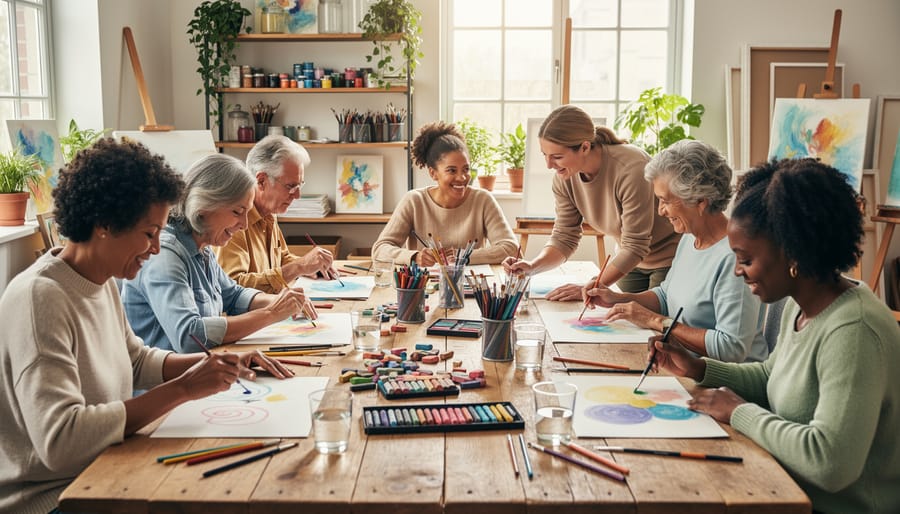
Walking into your first art therapy session, you won’t face an easel and a blank canvas with pressure to create something impressive. The space typically looks more like a comfortable meeting room with art supplies available, and the therapist starts by having a conversation about what brought you there and what you hope to get from the experience. There’s no expectation that you’ll paint your feelings or produce gallery-worthy work.
In an individual session, your therapist might suggest working with specific materials based on what you’re dealing with. Clay, for instance, offers a physical outlet that many men find grounding when managing anger or frustration. The therapist observes what you create and how you work with the materials, sometimes asking questions about your choices or what the process felt like, but never interpreting your work for you or pushing you to explain more than you’re comfortable sharing.
Common approaches therapists use with men include:
- Sculpture work with clay or found objects, which provides a physical, hands-on outlet
- Collage using magazines and printed images to explore identity or life transitions without starting from scratch
- Mask-making to examine different roles or aspects of self
- Visual journaling or graphic design tutorials that build skills while processing experiences
- Photography projects that shift focus outward while still reflecting internal states
Group sessions follow a similar pattern but include structured activities where participants work alongside each other. You’re not required to share personal details with the group unless you choose to, and many men appreciate the parallel nature of group work, where simply being in the presence of others working through their own stuff reduces isolation without demanding vulnerability.
Sessions typically run 60 to 90 minutes, and your therapist will check in regularly about whether the approach is working for you. If something doesn’t feel right, you can say so. The whole point is creating a space where you can engage with difficult emotions on your terms, at your pace, without judgment about how you get there.
Accessing Art Therapy in Canada: Options and Affordability
Finding the right art therapy support doesn’t have to be complicated or expensive. In Canada, you have several pathways depending on where you live and what works for your schedule and budget.
Private practice art therapists offer the most flexibility. You can search the Canadian Art Therapy Association’s member directory to find registered therapists in your area. Sessions typically run between $80 and $150, though many practitioners offer sliding scale fees based on income. It’s worth asking directly about reduced rates when you first make contact.
Community mental health centres and non-profit organizations often provide art therapy at lower cost or free, though wait times can stretch several months depending on your region. Some men’s support organizations now include creative therapies in their programming, particularly in urban centres like Toronto, Vancouver, and Montreal.
Employee assistance programs sometimes cover art therapy under mental health benefits. Check your EAP details or talk to HR, many programs include a set number of sessions at no cost to you. Standard health insurance coverage for art therapy varies significantly between providers, so review your policy or call to confirm what’s covered before your first session.
Online art therapy has expanded access considerably. Virtual sessions cost less than in-person visits and eliminate travel, making them practical if you’re in a rural area or working irregular hours. You’ll need basic art supplies at home, but therapists can suggest simple, affordable materials to start with.
Art Therapy for Common Mental Health Issues in Canada specifically focuses on keeping costs manageable and reducing wait times. They offer both individual and group options, with transparent pricing and shorter queues than traditional public services. Their approach recognizes that cost and access are real barriers, not excuses.
Taking the First Step: Starting Your Art Therapy Journey
Starting something new takes guts, and that’s especially true when it comes to reaching out for support with mental health. If you’re reading this and feeling uncertain, that’s completely normal. Most guys who eventually find art therapy helpful started out skeptical or uncomfortable with the whole idea.
Do I need to be good at art to try art therapy?
Not at all. Art therapy isn’t about creating gallery-worthy pieces or having technical skill. The therapeutic benefit comes from the process of creating, not the final product.
What if I don’t know what to talk about in sessions?
The art itself often guides the conversation. You might start by simply creating something, and the therapist will help you explore what emerges without forcing you to have everything figured out ahead of time.
Can art therapy really help with serious mental health issues?
Yes. Art therapy is an evidence-based treatment that addresses depression, anxiety, trauma, and substance use effectively, often working alongside other treatments when needed.
The practical first step is straightforward: reach out to Art Therapy Canada to learn about options that fit your schedule and budget. You might also consider exploring a digital illustration course as a low-pressure entry point to creative expression. There’s no commitment to share your work or explain yourself until you’re ready. Taking action, even a small step, matters more than having it all figured out.
