

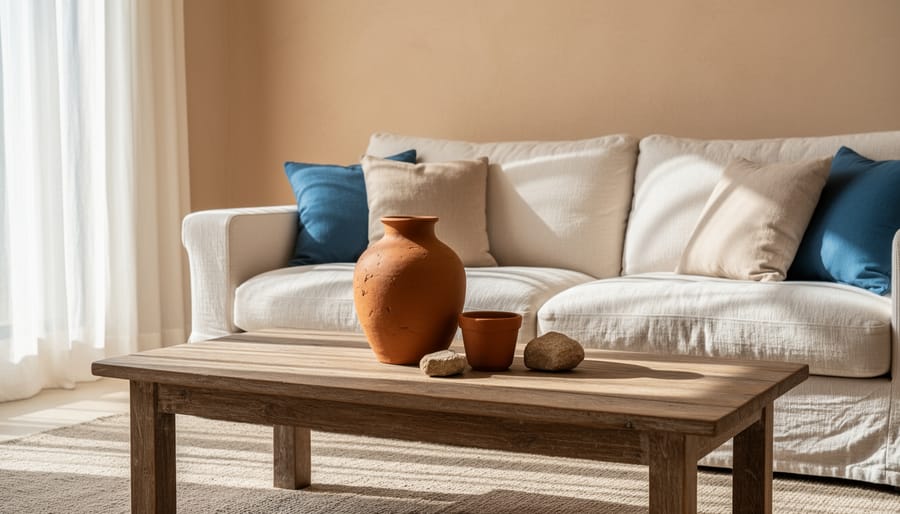
Mediterranean interior design brings the warmth of sun-drenched coastlines into your home through natural materials, earthy color palettes, and handcrafted textures that create spaces where you can truly exhale. It’s more than an aesthetic choice. The style’s emphasis on natural light, organic elements, and uncluttered spaces directly supports emotional well-being by reducing visual stress and fostering a sense of calm that many of us desperately need.
Right now in 2026, we’re seeing Modern Coastal Mediterranean emerge as a leading design direction, blending traditional warmth with contemporary simplicity. The trend emphasizes tactile materiality, sculptural volumes, and a renewed appreciation for craftsmanship. Think aged woods, stone that brings permanence, clay introducing authenticity, and velvet adding softness. These aren’t just pretty materials. They engage your senses in ways that smooth surfaces and synthetic finishes simply can’t match.
What makes this approach particularly accessible is that you don’t need a complete renovation or designer budget to create a therapeutic Mediterranean-inspired space. Small, intentional changes can shift how a room feels. The style celebrates imperfection, which means thrifted terracotta pots, second-hand wooden furniture, and DIY textile projects all belong here.
For those of us dealing with anxiety, depression, or simply the weight of daily stress, our environments profoundly affect our mental state. Mediterranean design offers a framework for building spaces that support rather than deplete us. The connection to nature through materials like wood and stone, the soothing quality of warm neutrals and ocean blues, the invitation to slow down that comes from handcrafted details, all these elements work together to create what you might call therapeutic architecture.
This isn’t about perfection or Instagram-worthy rooms. It’s about designing spaces where you feel safe, grounded, and genuinely at home in your own skin.
What Makes Mediterranean Interior Design Different
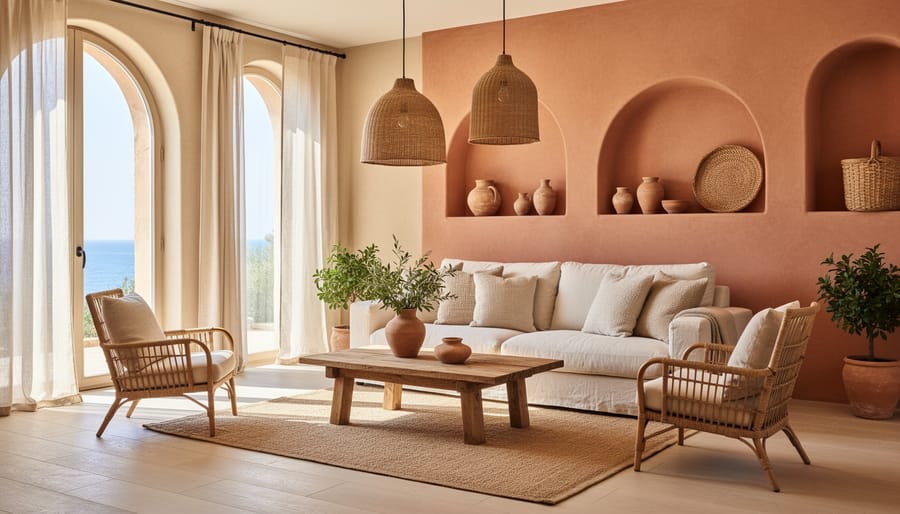
Mediterranean interior design draws its inspiration from the sun-drenched homes of Greece, Italy, Spain, and southern France. It’s not about recreating a specific historic period or following rigid rules. Instead, it’s a philosophy rooted in honest materials, abundant light, and a profound connection to the natural world. The style celebrates the feeling of coastal living, relaxed, open, and grounded in simplicity.
At its heart, Mediterranean design prioritizes natural light. Large windows, light-colored walls, and reflective surfaces work together to fill rooms with sunshine. Open floor plans encourage airflow and create a sense of spaciousness, even in smaller homes. This emphasis on openness and brightness sets the style apart from more enclosed, compartmentalized designs. It invites the outdoors in rather than shutting it out.
The materials tell their own story. Stone floors, wooden ceiling beams, terracotta tiles, and plaster walls bring texture and authenticity. These aren’t polished, sterile surfaces, they show their age and character. Clay pottery, wrought iron fixtures, and handwoven textiles add warmth and a human touch. In 2026, designers are leaning into aged woods and natural materials that emphasize tactile materiality and craftsmanship, which aligns perfectly with Mediterranean tradition.
Color palettes mirror coastal landscapes, warm whites like sun-bleached linen, earthy terracotta and ochre, deep ocean blues, and olive greens. These aren’t bold or jarring. They’re soft, warm, and grounding. When combined with the natural materials, they create spaces that feel lived-in and welcoming rather than sterile or overly curated.
What makes this different from minimalist or Scandinavian styles is the embrace of warmth and texture. Mediterranean spaces don’t aim for sparse perfection. They welcome imperfection, layers, and the marks of daily life. This quality, the acceptance of wear and authenticity, creates an environment that feels safe, restorative, and deeply human.
How Mediterranean Spaces Support Mental Health
Natural Light and Emotional Balance
Mediterranean homes were designed around the sun, and that’s no accident. Large windows, white-washed walls that reflect brightness, and open floor plans that let light travel freely create spaces that shift with the day’s rhythm. This approach directly supports mental health: natural light benefits mood by regulating circadian rhythms, improving sleep quality, and reducing symptoms of depression and anxiety.
When you bring this principle into your own space, you’re practicing a form of environmental self-care. Opening curtains first thing in the morning, positioning a reading chair near a window, or painting a dark room in warm white can become daily rituals that support emotional balance. These aren’t just design choices, they’re acts of intention that mirror the awareness cultivated in art therapy mindfulness practices.
You don’t need floor-to-ceiling windows to benefit. Even small changes, removing heavy drapes, adding mirrors to bounce light into shadowed corners, or choosing sheer fabrics, can transform how a room feels and how you feel in it.
Organic Materials as Grounding Elements
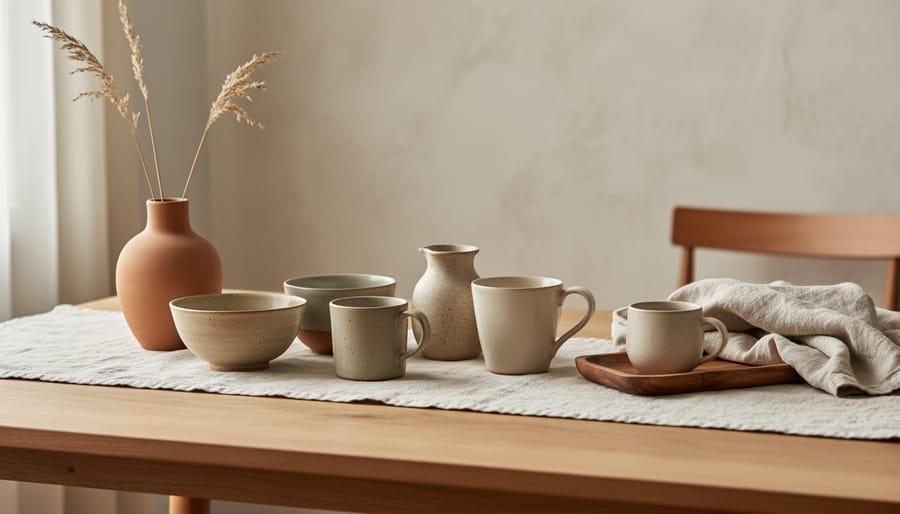
Natural materials aren’t just decoration. They carry weight, history, and a quiet presence that synthetic alternatives can’t replicate. When you bring stone, wood, clay, or terracotta into your home, you’re inviting elements that have existed for millennia, materials that feel real because they are. This authenticity matters for emotional grounding. Touching a wooden table worn smooth over time or resting your hand against cool stone creates a physical anchor, a reminder that some things endure.
Research confirms what many of us feel intuitively: biophilic materials boost well-being by reconnecting us to the natural world. Mediterranean design leans heavily into this principle. Stone brings permanence and solidity. Wood adds warmth and familiarity. Clay introduces imperfection and handmade character. Glass creates lightness without sterility. Velvet, though not strictly natural in modern production, adds softness and tactile depth that balances harder surfaces.
The 2026 embrace of aged woods and tactile materiality fits perfectly here. Weathered beams, reclaimed planks, and finishes that show grain and knots tell stories. They don’t pretend to be flawless. That honesty, the visible passage of time, the acknowledgment of wear, can be surprisingly comforting. It gives you permission to be imperfect too.
You don’t need a villa to benefit. A clay pot on a windowsill, a wooden cutting board left out on the counter, a stone bowl holding fruit, these small gestures shift the energy of a room toward something more grounded and human.
Key Elements to Bring Mediterranean Design Into Your Space
You don’t need a major renovation or a hefty budget to bring the calming essence of Mediterranean design into your home. Start with what’s already around you and add layers gradually, focusing on the elements that resonate most with your emotional needs and creative vision. Small, intentional changes can shift the entire feeling of a room.
The Mediterranean color palette centers on what you’d see walking through a coastal village at midday: warm whites that reflect sunlight without the starkness of pure white, earthy terracotta tones that ground a space, soft ocean blues ranging from pale aqua to deeper azure, and sun-bleached neutrals in sand and stone. Paint is one of the most affordable transformations you can make. Even painting a single accent wall in a warm terracotta or coating existing furniture in a chalky white creates an immediate shift. These colors work together because they’re found side by side in nature, so mixing them feels instinctive rather than forced.
Materials matter more than matching furniture sets. Mediterranean design celebrates the tactile and the handmade, which aligns beautifully with the 2026 emphasis on craftsmanship and natural materials. Stone brings permanence, wood adds warmth, glass creates lightness, clay introduces authenticity, and velvet adds softness and depth. You don’t need marble countertops to capture this. A wooden cutting board displayed on your counter, clay pots for your plants, a glass vase catching afternoon light, or a velvet throw pillow in deep ocean blue all contribute to the sensory richness that makes Mediterranean spaces feel alive.
Here are accessible ways to layer these elements into your space:
- Swap out synthetic textiles for linen curtains or cotton throws in natural tones
- Add terracotta pots (even painted plastic ones work) for herbs or succulents
- Display wooden bowls, woven baskets, or ceramic dishes as functional art
- Hang a large mirror opposite a window to amplify natural light
- Scout thrift stores for wrought iron candle holders, aged wood frames, or vintage glass bottles
- Incorporate tassels and trims on pillows or lampshades, reflecting current 2026 trends
Texture creates the emotional depth that flat, modern spaces often lack. Layer rough with smooth: a nubby linen cushion against a smooth wooden bench, a woven jute rug under a sleek ceramic vase. The 2026 focus on tactile materiality and sculptural volumes means simple shapes with interesting textures carry more impact than ornate decorations. A single rounded terracotta lamp with a linen shade feels more Mediterranean than a collection of busy patterns.
Pure geometries and sculptural silhouettes also define the 2026 take on Mediterranean design. Think rounded archways (even suggested with paint), curved furniture edges, and pottery with strong, simple shapes. You can create this effect by choosing one or two statement pieces with clean, rounded lines rather than filling a room with angular furniture.
The beauty of this approach is that it’s forgiving and personal. Mediterranean design evolved from what people had locally and what made sense in hot, bright climates. Your version should reflect what’s available to you and what brings you comfort, not a catalog’s version of perfection.
Creating Your Space as a Creative Expression
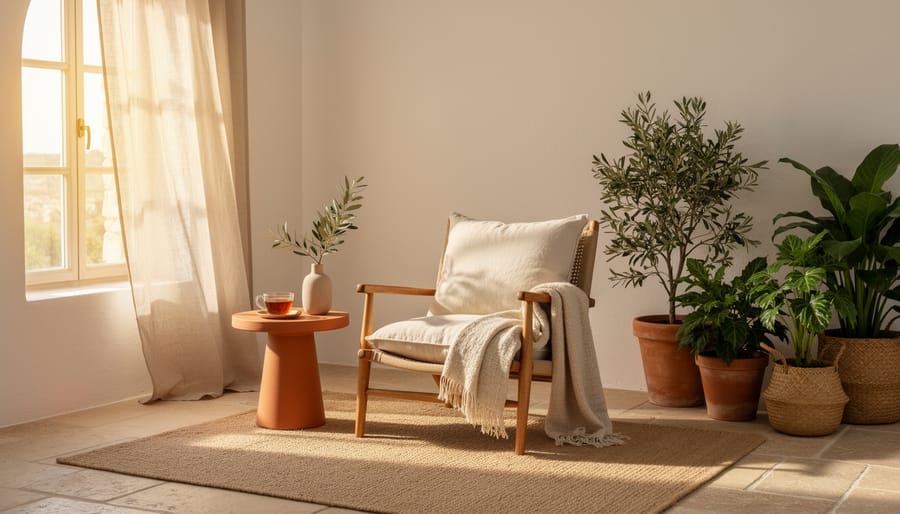
Decorating your space isn’t just about choosing the right shade of terracotta or finding the perfect ceramic vase. It’s an act of self-discovery, a process that reveals what you need emotionally and what brings you genuine comfort. When you approach Mediterranean interior design as a creative practice rather than a project to complete, you give yourself permission to explore, experiment, and express parts of yourself that might not have a voice elsewhere.
Think of each choice as a small conversation with yourself. What draws you to that particular texture of linen? Why does one shade of blue feel peaceful while another feels cold? These aren’t trivial questions. They’re invitations to understand your emotional landscape better. Many people find that coping through art therapy extends naturally into how they shape their living spaces, using color, texture, and form to process feelings and create safety.
Your cultural background and personal history matter deeply here. Mediterranean design traditionally draws from specific coastal regions, but your version should reflect your own story. Maybe you incorporate patterns from your heritage, or choose materials that remind you of a place that shaped you. A hand-woven basket from a local artisan, a piece of driftwood you found on a walk, aged wood with visible grain, these objects carry meaning beyond their aesthetic function.
Let go of perfection. A home that looks staged feels emotionally flat. The beauty of Mediterranean spaces comes from their lived-in warmth, the layers built over time. Start with one corner, one wall, one element that speaks to you. Notice how it makes you feel. Adjust. Add. The process itself, the touching, arranging, considering, is where the therapeutic value lives. You’re not decorating a room. You’re creating a physical expression of who you are and what you need to thrive.
Resources and Support for Getting Started
Getting started with Mediterranean-inspired design doesn’t require an expensive consultant or complete renovation. Several Canadian-accessible digital platforms make visualization and planning approachable. Houzz Pro offers 3D rendering tools that let you experiment with color palettes, materials, and layouts before committing to purchases, helpful if you want to see how terracotta walls or natural wood furniture might transform your space. Mydoma Studio provides project management features that keep design decisions organized, which can reduce overwhelm if you’re redesigning multiple rooms or working slowly over time.
Beyond digital tools, online art therapy sessions offer meaningful support during the creative process of reimagining your living space. A therapist can help you explore what colors, textures, and elements genuinely resonate with your emotional needs rather than just following trends. Group art therapy sessions sometimes include home environment exercises where participants share design ideas and receive encouragement, making the journey less isolating.
Community resources matter too. Local thrift stores, habitat restoration centers, and buy-nothing groups often carry secondhand clay pots, wooden furniture, and natural fiber textiles at minimal cost. Public libraries frequently offer design books and magazines you can borrow for inspiration. The goal isn’t perfection or speed, it’s creating a space that feels authentically yours and supports your well-being, one small, intentional choice at a time.
Creating a home that supports your mental well-being doesn’t require a complete renovation or a designer’s budget. Mediterranean interior design offers a compassionate framework for shaping spaces that feel calming, authentic, and deeply personal. Each choice you make, whether it’s bringing in a terracotta vase, opening curtains to let in more light, or adding a textured throw, becomes a small act of self-care.
The beauty of this approach lies in its accessibility. You don’t need to transform everything at once. Start with what feels manageable: a single room, a corner that needs attention, even just a windowsill. As 2026 trends remind us, there’s renewed appreciation for craftsmanship, natural materials, and the organic details that make a space feel truly yours. The process itself, choosing colors that resonate with you, arranging objects that hold meaning, creating environments that reflect who you are, can be as therapeutic as the finished result.
Can I create a Mediterranean-inspired space on a limited budget?
Absolutely. Focus on affordable natural materials like clay pots, secondhand wood furniture, and warm white paint. Textiles, plants, and natural light are free or low-cost ways to shift the atmosphere of any room.
What if I live in a small apartment?
Mediterranean design actually works beautifully in smaller spaces. Prioritize natural light, choose a cohesive warm color palette, and use mirrors to create openness. Even a few organic elements can transform how a compact space feels.
How does changing my space actually help my mental health?
Our environments directly influence our nervous systems. Calming colors, natural materials, and intentional design reduce stress responses and create psychological safety, making it easier to regulate emotions and feel grounded.
Your living space holds therapeutic power. It can quiet anxiety, invite reflection, and become a canvas for self-expression. Trust your instincts, honor your needs, and remember that building a nurturing environment is an ongoing practice, not a destination. You deserve spaces that support your well-being, and you have everything you need to begin.
