

Finding calm when anxiety rises doesn’t require a prescription or a therapist’s office. Seven types of music, from instrumental ambient soundscapes to personalized playlists, offer accessible relief that you can access anywhere, anytime. Research confirms what many of us already feel: certain sounds genuinely shift our nervous system from fight-or-flight to rest-and-digest, making music one of the most practical tools in your anxiety management toolkit.
The science behind this isn’t just feel-good theory. Canadian researchers studying 163 patients on anti-anxiety medications found measurable benefits from at-home music sessions. Understanding how sound therapy work s helps explain why a lo-fi playlist during study sessions or nature sounds before bed can quiet racing thoughts and slow your heartbeat.
Different situations call for different sonic support. The calming music that grounds you during meditation might not be what you need while trying to focus on work. That’s why we’ve identified seven distinct music categories, each tailored to specific anxiety triggers and daily scenarios. Whether you’re looking for deep relaxation, emotional balance, or just something to stop the mental spiral during a stressful commute, there’s a sound palette designed for exactly that moment.
This isn’t about replacing professional mental health care. Think of music as a complement to therapy, medication, or other treatments you’re already using. It’s an affordable, stigma-free entry point into self-care that works whether you’re new to managing anxiety or looking to expand your existing toolbox.
How We Chose These Music Types
We built this list by combining research evidence with how people actually use music for anxiety relief in 2026. Studies show that listening to music can reduce anxiety, in some cases as effectively as anti-anxiety medications, and recent surveys report that three-quarters of people use music to relieve stress.
Beyond the science, we looked at real engagement patterns. Popular playlists like the 2-hour-plus study compilations designed for anxiety relief show what listeners find genuinely helpful. We tracked playlist saves, typical listening durations, and how music fits different situations, whether you’re studying, meditating, or moving through yoga.
Accessibility mattered too. Every music type we selected is widely available across streaming platforms, free or low-cost, and doesn’t require special equipment. We also ensured variety, recognizing that anxiety shows up differently for different people. Some need complete stillness, others focus better with gentle beats, and many benefit from movement-based practices. This range means you can match music to your specific needs rather than settling for a one-size-fits-all approach.
1. Instrumental Ambient Music, For Deep Relaxation
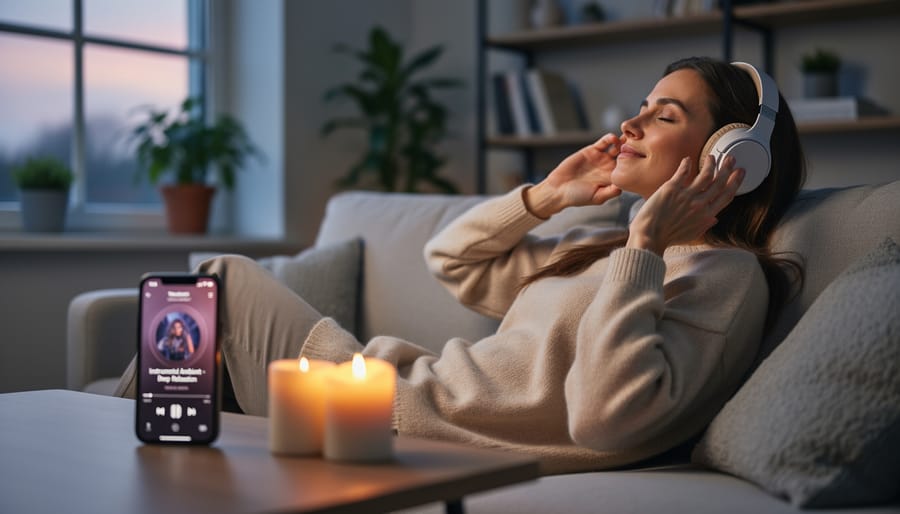
Instrumental ambient music strips sound down to its essence: sustained tones, gentle swells, and unhurried progressions that rarely exceed 60 beats per minute. These slow-tempo soundscapes operate without lyrics, melodies, or sudden changes, creating a sonic environment that invites your nervous system to settle rather than engage.
The absence of words matters more than you might expect. When anxiety tightens its grip, your mind often races through thoughts, scenarios, and worries. Lyrics, even calming ones, still require language processing, keeping parts of your brain active and alert. Instrumental ambient music sidesteps this entirely. Without words to parse or stories to follow, your cognitive load decreases. You’re not decoding meaning or anticipating a chorus. You’re simply present with sound that asks nothing of you.
This quality makes ambient music particularly effective for meditation sessions, where the goal is to observe thoughts without getting caught in them. The music provides a gentle anchor: something to return to when your mind wanders, without creating new mental content to process. During massage therapy or bodywork, these minimalist soundscapes support the physical release happening in your muscles and tissues, creating space for deeper relaxation.
Before sleep, instrumental ambient tracks help transition your brain from beta waves (active thinking) toward the slower alpha and theta states that precede rest. The predictable, repetitive nature signals safety to an anxious nervous system, no surprises, no demands, just consistent, supportive presence.
2. Nature Sounds and Binaural Beats, For Grounding
Nature sounds paired with binaural frequencies offer a powerful grounding technique for anxiety relief, especially when your mind won’t settle during work or study sessions. Rain pattering on windows, ocean waves rolling in steady rhythm, and forest soundscapes create an auditory connection to calming natural environments that many of us rarely experience in daily life.
These recordings work by masking distracting background noise while giving your anxious brain something soothing to focus on. Unlike silence, which can amplify racing thoughts, gentle nature sounds provide just enough sensory input to occupy the parts of your mind that tend to spiral without demanding active attention.
Binaural beats add another layer by playing slightly different frequencies in each ear, creating a perceived third tone that may influence brainwave patterns. While research continues to explore exactly how this affects anxiety, many listeners report feeling more centered and less mentally scattered when using these tracks during tasks that normally trigger stress.
The real advantage here is versatility. You can layer nature sounds quietly under other activities without the distraction of lyrics or melody changes. They’re particularly effective during deep work, studying for exams, or moments when you need to stay present but feel anxiety building. The predictable patterns and lack of sudden changes create a stable sonic environment that supports focus rather than demanding it.
Start with 15-minute sessions to see how your body responds, then adjust duration and volume to match your comfort level.
3. Classical Music (Slow Movements), For Emotional Balance
Classical music’s slow movements, marked adagio or andante in scores, offer a predictable structure that anxious minds find deeply reassuring. These gentle, measured tempos (typically 60-80 beats per minute) mirror a resting heart rate, creating physiological calm. The compositions follow established patterns: melodies develop logically, harmonies resolve as expected, and the overall arc feels contained rather than unpredictable. This predictability acts as an emotional anchor when anxiety makes the world feel chaotic.
Think of the second movement from Beethoven’s “Pathétique” Sonata or the adagio from Vivaldi’s “Winter.” These pieces provide emotional expression without overwhelming intensity. The instrumentation, strings, piano, woodwinds, stays warm and non-jarring. Unlike music with sudden dynamic shifts or dissonant modern compositions, these slow classical movements create what researchers call a “safe sonic environment.”
Classical music has been used therapeutically for centuries, long before formal music therapy existed. Hospitals and wellness centers continue incorporating these compositions into treatment settings because they consistently help patients regulate emotional states. The music doesn’t demand attention the way lyrics or complex rhythms do. You can let it wash over you during meditation, art-making, or quiet reflection.
For anxiety relief, focus on slow movements from larger works rather than entire symphonies. Baroque and Romantic periods offer particularly accessible options, their emotional landscapes feel human-scaled rather than overwhelming.
4. Lo-Fi Hip Hop and Chill Beats, For Studying and Focus
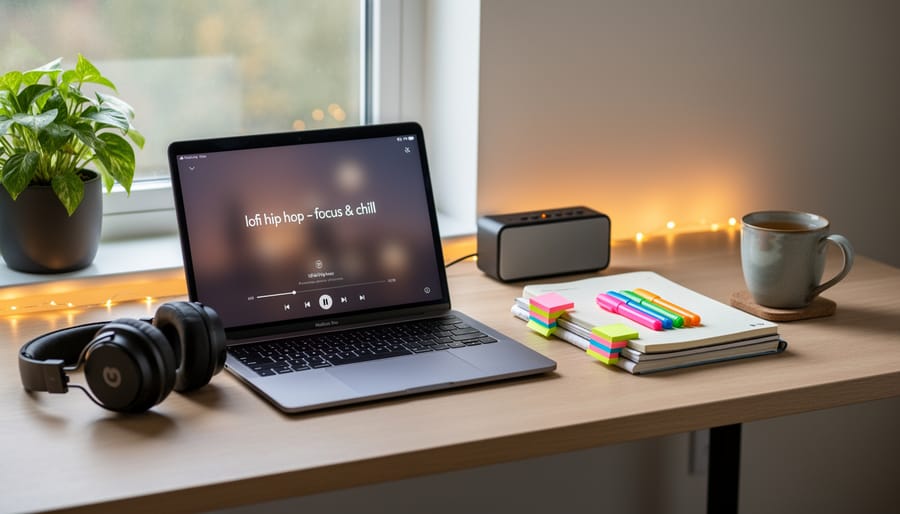
Lo-fi hip hop has become the soundtrack of choice for millions dealing with anxiety while trying to concentrate. These gentle, repetitive beats blend jazz samples, soul influences, and subtle percussion to create a sonic environment that calms racing thoughts without demanding attention. The predictable loops and mellow tempo, typically between 60-90 beats per minute, match a resting heart rate, helping anxious bodies settle into focus rather than fight against worry.
What makes lo-fi particularly effective for anxiety relief is its balance. The music provides just enough sound to mask distracting background noise and intrusive anxious thoughts, yet stays unobtrusive enough that your brain can direct energy toward the task at hand. There are no jarring transitions, sudden volume changes, or lyrics to process, which means fewer triggers for an already overstimulated nervous system.
Students and remote workers consistently choose lo-fi for extended study or work sessions because it creates a contained, predictable auditory space. When your mind knows what to expect from the soundtrack, it spends less energy on alert and more on the work in front of you.
The 2026 playlists available on streaming platforms often combine lo-fi with other calming elements like soft rain sounds or distant vinyl crackle, adding layers of comfort. You’ll find compilations explicitly labeled for stress relief and studying, with some accumulating thousands of saves from users who’ve discovered this music helps them manage both anxiety and productivity. If you need to calm your mind while still getting things done, lo-fi provides structure without pressure.
5. Yoga and Meditation Music, For Active Mindfulness
Yoga and meditation music is specifically composed to match the pace of controlled breathing and deliberate movement, making it ideal when anxiety feels physical and restless. Unlike purely ambient tracks, this music includes gentle percussion, chimes, or rhythmic drones that mirror the flow of a vinyasa sequence or the steady inhale-exhale cycle of meditation practice. The repetitive structure helps anchor your attention during movement rather than letting anxious thoughts spiral.
Current 2026 playlists designed for this purpose combine traditional instruments like Tibetan singing bowls and Indian flutes with modern production that keeps tempo steady and predictable. For example, the Spotify playlist “Relaxing Stress Relief Music 2026 – Studying, Yoga, calming music for anxiety” by APbeat Publishing includes tracks specifically curated for yoga sessions and meditation alongside study and massage therapy use. These playlists often run long enough to support full practice sessions without interruption.
The rhythm in yoga music serves a practical purpose beyond atmosphere: it guides breath work, which directly counters the shallow, rapid breathing that accompanies anxiety. When you match your movements and breathing to a consistent musical pulse, you’re essentially using sound as a biofeedback tool that brings your nervous system into a calmer state. This makes yoga and meditation music particularly effective for anxiety that manifests as restlessness, racing heart, or the urge to pace.
Walking meditation benefits from this same rhythmic quality. Choose tracks with a tempo that matches a comfortable walking pace, and let the music cue each step and breath as you move.
6. Acoustic and Folk, For Gentle Emotional Release
Acoustic and folk music creates a gentle space for emotional processing through stripped-down instrumentation and warm, human vocals. A simple guitar melody, piano accompaniment, or string arrangement provides enough structure to feel safe without overwhelming an anxious mind. Unlike heavily produced tracks, these songs let you hear the breath between notes and the subtle imperfections that make music feel personal rather than mechanical.
The familiar verse-chorus patterns in folk and acoustic music offer predictability that calms racing thoughts. When you know a gentle rise is coming before the chorus settles back down, your nervous system can anticipate rather than brace for sudden changes. Soothing vocals add a human connection without demanding active listening, creating background companionship that feels comforting instead of intrusive. This makes acoustic arrangements particularly helpful when you need to de-stress effectively while still processing what you’re feeling rather than pushing emotions away.
Choose acoustic and folk music when you want to acknowledge difficult feelings without getting lost in them. The simplicity grounds you in the present moment while the emotional honesty in the lyrics and melodies validates whatever you’re experiencing. Artists like Iron & Wine, Sufjan Stevens, or José González create soundscapes that hold space for sadness, worry, or uncertainty without amplifying them. This gentleness makes the genre ideal for evenings when anxiety feels heavy but you’re not ready for complete silence.
7. Personalized Playlists, For Individual Comfort
While research shows structured playlists for anxiety relief get thousands of saves on platforms like Spotify, your most effective calming music might be something entirely personal. A song that soothes your nervous system could be outside any recommended genre because it connects to a specific memory, person, or time in your life when you felt safe.
Creating your own anxiety-relief playlist means paying attention to what actually works for you rather than what should work in theory. Maybe it’s the folk album your parent played during childhood car rides, a particular pop song from a happy summer, or even an upbeat track that helps you release tension through movement. The goal is collecting music that consistently shifts your emotional state toward calm, regardless of tempo, style, or critical acclaim.
Start by noticing which songs make your shoulders drop or your breathing deepen. Add five to ten tracks and listen during a low-stress moment first, then gradually try the playlist when anxiety appears. You can combine this personal musical toolkit with other accessible practices like art therapy mindfulness exercises for a more complete self-care approach.
The advantage of personalized playlists is complete control. You decide the length, order, and content, updating whenever your needs change. This accessibility makes music one of the most democratic mental health tools available.
How to Use Music for Anxiety Relief
Getting the most from music for anxiety relief isn’t about simply hitting play, it’s about building intentional listening habits that fit your life. Research on daily music listening shows that consistency matters, so try setting aside 15 to 30 minutes each day specifically for therapeutic listening, whether that’s during your morning routine, a lunch break, or before bed.
Volume makes a real difference. Keep it moderate, at a level where you can hear the music clearly without straining, but it doesn’t dominate your environment. You’re looking for background support, not distraction. As for headphones versus speakers, both work, but headphones can create a more immersive experience when you need to block out stressful surroundings, while speakers work well for gentle background calm during activities like drawing or stretching.
Here are some practical strategies to make music a reliable anxiety-relief tool:
- Set aside 15-30 minutes daily for intentional listening, not just background noise
- Keep volume moderate, loud enough to engage but not overwhelming
- Create situation-specific playlists: one for focus, another for winding down, a third for active movement
- Combine music with breathing exercises or gentle stretching to deepen the calming effect
- Use music as a transitional tool between activities, signaling your mind to shift gears
Music pairs exceptionally well with other mental health practices. Many people find that playing calming music during online art therapy sessions or while doing creative work at home enhances their ability to process emotions and stay present. You might also track what works personally by noting which playlists or music types help most in different situations, building your own evidence base over time rather than relying solely on generic recommendations.
Music and Art Therapy: A Powerful Combination
Music doesn’t just calm your mind on its own, it can amplify the benefits of art therapy when used together. At Art Therapy Canada, we believe accessible mental health care means giving people multiple tools they can combine in ways that work for them.
During art therapy sessions, instrumental ambient or classical music can create a soothing backdrop that helps you focus on creative expression without distraction. Some therapists incorporate nature sounds while clients paint or sculpt, grounding the experience in calming sensory input. The rhythm of lo-fi beats might support the repetitive motions of drawing or coloring, creating a meditative flow state.
Between formal therapy appointments, music serves as an affordable bridge. You can’t always access a therapist when anxiety hits, but you can pull up a yoga playlist or acoustic track within seconds. This accessibility matters enormously for mental health equity, streaming platforms offer thousands of anxiety-relief playlists at no cost, making support available regardless of income or location.
Think of music as your portable anxiety toolkit. It complements professional care rather than replacing it, giving you agency over your emotional regulation whenever you need it.
Common Questions About Music for Anxiety
Most people considering music for anxiety relief have similar practical questions. Here’s what research and real-world usage patterns tell us.
Can music really reduce anxiety as much as medication?
Studies suggest that listening to music can reduce anxiety, in some cases even more effectively than certain anti-anxiety medications. However, music works best as a complement to professional treatment, not a replacement for prescribed medication or therapy.
How long should I listen to music for anxiety relief?
Research on daily music listening shows benefits from consistent sessions, with many effective playlists running around two hours or longer. Start with 15-20 minutes and adjust based on what feels helpful for your specific needs.
Do lyrics always make anxiety worse?
Not necessarily. While instrumental music often works better during active anxiety because it requires less mental processing, lyrics can be comforting if the song has positive personal associations. Your individual response matters more than strict rules.
Can I use calming music while studying or working?
Absolutely. Many people find that genres like lo-fi hip hop, nature sounds, and instrumental ambient music actually improve focus while reducing background anxiety during tasks.
Finding quality playlists has become easier as platforms recognize the demand for anxiety-relief music. Survey data shows that three-quarters of people use music to relieve stress or relax, and 65% report it helps their mental health and mood. Look for playlists specifically designed for anxiety relief, studying, yoga, or meditation, these tend to be curated with calming principles in mind. The number of saves or followers can indicate that others find them genuinely helpful, though your personal response is the ultimate test.
Remember that music is a tool in your broader mental health toolkit. It’s accessible and affordable, but it works best alongside other supports like therapy, healthy routines, and professional guidance when needed.
Finding the right music to calm anxiety is a personal journey, and the good news is that it doesn’t have to be complicated or expensive. Whether you’re drawn to ambient soundscapes, nature sounds, classical movements, lo-fi beats, yoga music, acoustic folk, or your own carefully chosen playlist, what matters most is what resonates with you. Music works best as part of a broader mental health toolkit, it can enhance art therapy sessions, support meditation practices, or simply give you a moment of peace in a difficult day. Mental health care should be accessible to everyone, and music offers one of the most affordable and immediate ways to support your emotional well-being. We encourage you to explore different types, notice what helps you feel grounded, and remember that Art Therapy Canada is here with more resources to support your journey toward calm and connection.
