
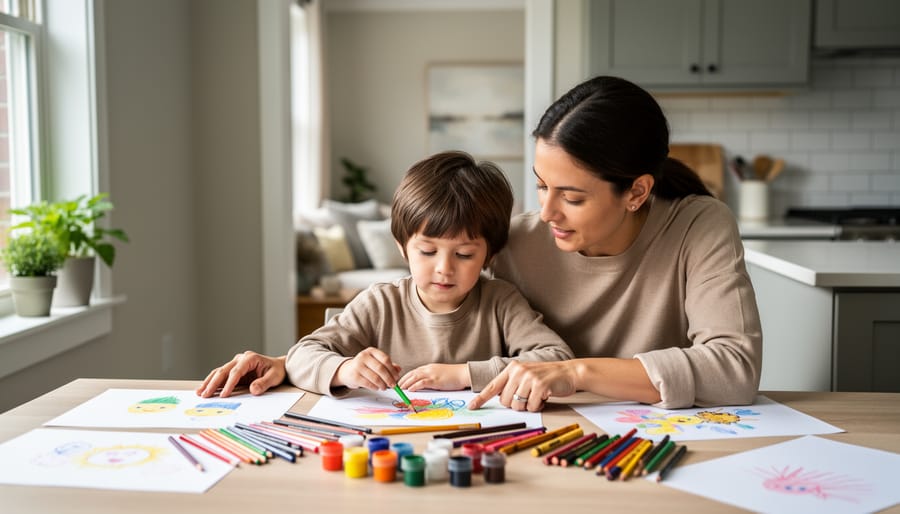
When your child is struggling with their mental health in Belleville, Ontario, you need to know exactly where to turn and how quickly you can get help. Children’s Mental Health Services is the regional Lead Agency serving Hastings and Prince Edward counties, offering free, confidential mental health counseling, therapy, and support for children, youth, and families through in-person, virtual, and community-based care. As of May 2026, the Belleville office reported an intake client wait time of just one week, which is encouraging news for families who have been navigating a system where months-long waits have historically been the norm.
Finding the right support when you’re worried about your child can feel overwhelming. You might be seeing changes in their behavior, mood, or school performance. Maybe they’re withdrawing from friends, expressing anxiety about things that never bothered them before, or having trouble sleeping. These moments matter, and reaching out for professional help is a sign of strength, not failure.
This guide will walk you through what Children’s Mental Health Services offers, how to access care quickly, and what to expect during the process. We’ll also explore complementary options like art therapy that can work alongside traditional counseling to give your child multiple pathways to healing. The goal is simple: to help you feel confident and informed as you take this important step for your child’s wellbeing. You’re not alone in this, and support is closer than you might think.
What Children’s Mental Health Services in Belleville Actually Offers
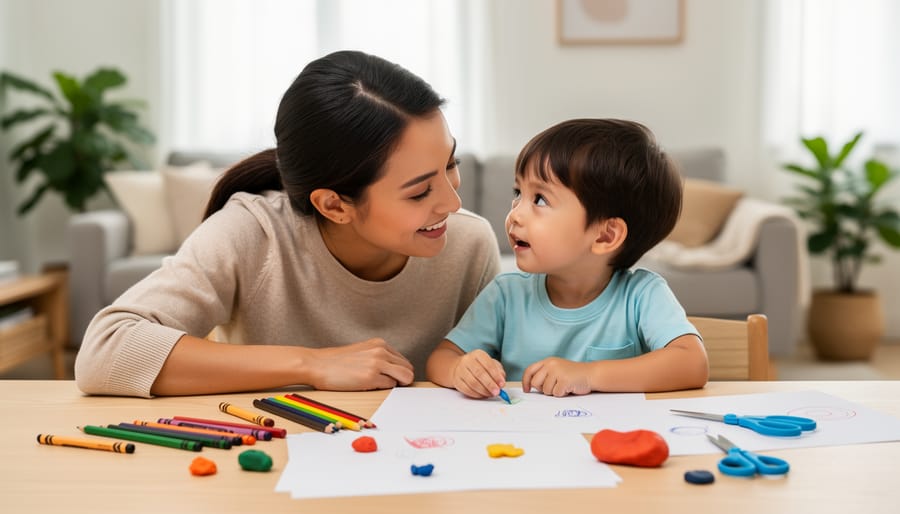
Children’s Mental Health Services operates as the designated Lead Agency for children’s mental health across Hastings and Prince Edward counties, which means they coordinate and deliver mental health support for young people throughout the region. If you live in Belleville or the surrounding area and your child needs mental health care, this is the primary public resource available to you.
The service is completely free and confidential. You won’t face any bills, insurance requirements, or paperwork related to payment. This removes one of the biggest barriers families encounter when seeking mental health support for their children. The confidentiality protections mean your child can speak openly with therapists without those conversations being shared beyond the care team, creating a safe space for honest expression.
Children’s Mental Health Services supports children, youth, and families through multiple delivery formats. You can access in-person sessions at their Belleville office, connect virtually from home through secure video appointments, or receive community-based care where therapists meet families in more familiar settings like schools or community centres. This flexibility matters because some children feel more comfortable in their own environment, while others benefit from the structure of a dedicated clinical space.
The organization offers mental health counselling, therapy, and broader support services designed to address the range of challenges young people face, from anxiety and depression to behavioural concerns and trauma. As of May 2026, the Belleville office reported an intake client wait time of approximately one week. That’s the time between your initial contact and your first appointment to assess your child’s needs and begin planning care. For families in crisis or urgent need, that represents a significant improvement over the months-long waits that have historically plagued children’s mental health services across Ontario.
Anyone raising a child in Hastings or Prince Edward counties can reach out directly to access these services. There’s no referral requirement, no income threshold, and no complex eligibility screening standing between your family and support.
Why Wait Times Matter (And How They’re Changing in 2026)
Wait times for children’s mental health services have long been a source of frustration and anxiety for Ontario families. Before recent improvements, parents often faced waits of several months between recognizing their child needed help and getting that first appointment. For a struggling child, those months can feel endless, behaviors escalate, school performance suffers, and family stress compounds. When a parent finally musters the courage to reach out for professional support, being told to wait 12 or 16 weeks can feel like abandonment at the moment help is needed most.
The impact isn’t just emotional. Research consistently shows that early intervention produces better outcomes for children’s mental health challenges. A six-year-old experiencing severe anxiety who waits half a year for treatment may develop avoidance patterns and coping mechanisms that become harder to address later. Adolescents in crisis can’t pause their development while sitting on a waitlist. Timely access means catching problems before they become entrenched, building skills during critical developmental windows, and preventing secondary issues like academic failure or social isolation.
That one-week turnaround represents a meaningful shift for families in Hastings and Prince Edward counties. While wait times fluctuate based on staffing, demand, and service capacity, the trend toward faster intake in Belleville signals systemic improvements that benefit children when they need it most. Parents no longer face the impossible choice between waiting indefinitely or seeking private care they can’t afford. When children can access support within days rather than months, intervention happens while motivation is high, before crises deepen, and when families still have energy to engage in the therapeutic process.
When Traditional Services Aren’t Enough: Exploring Art Therapy
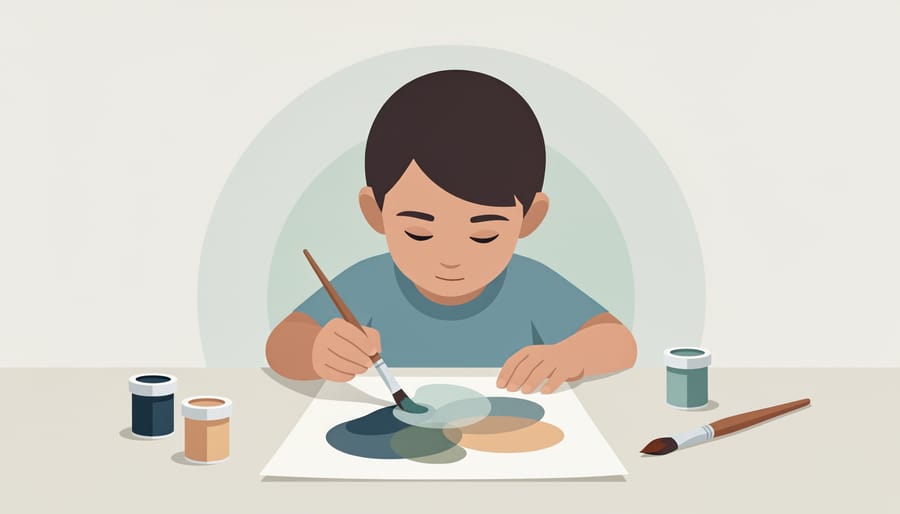
Some children find it nearly impossible to put their feelings into words. They might stare at the floor during therapy sessions, give one-word answers, or simply shut down when asked how they’re feeling. For these kids, traditional talk therapy can feel like being asked to describe a colour they’ve never seen. This is where art therapy steps in, offering a different pathway to healing that doesn’t require verbal fluency or emotional articulation.
Art therapy uses creative expression as the primary language of healing. Instead of sitting face-to-face answering questions, children draw, paint, sculpt, or create collages that naturally reveal what’s happening inside. A seven-year-old who can’t explain her anxiety might draw jagged lines in dark colours. A teenager struggling with anger might pound clay, releasing tension while creating something meaningful. The art becomes both the conversation and the mirror, showing children their own emotions in a form they can see, touch, and eventually understand.
This approach works because it matches how children naturally make sense of the world. Young minds process experience through play, imagination, and physical creation long before they develop sophisticated verbal skills. When a child uses purple paint to represent sadness or builds a fortress from cardboard to feel safe, they’re accessing emotional intelligence that exists beneath language. The therapist reads these visual cues, asks gentle questions about the artwork, and helps the child connect their creations to real feelings and experiences.
Art therapy isn’t just for children who struggle with words. It complements traditional counseling for kids who need multiple ways to work through trauma, grief, family changes, or persistent worry. The creative process itself builds emotional regulation, as children learn to start a project, tolerate frustration when it doesn’t go as planned, and find satisfaction in completion. These are the same skills that help them navigate difficult feelings outside the therapy room, making art therapy both treatment and training for lifelong emotional health.
How Art Therapy Works for Children and Youth
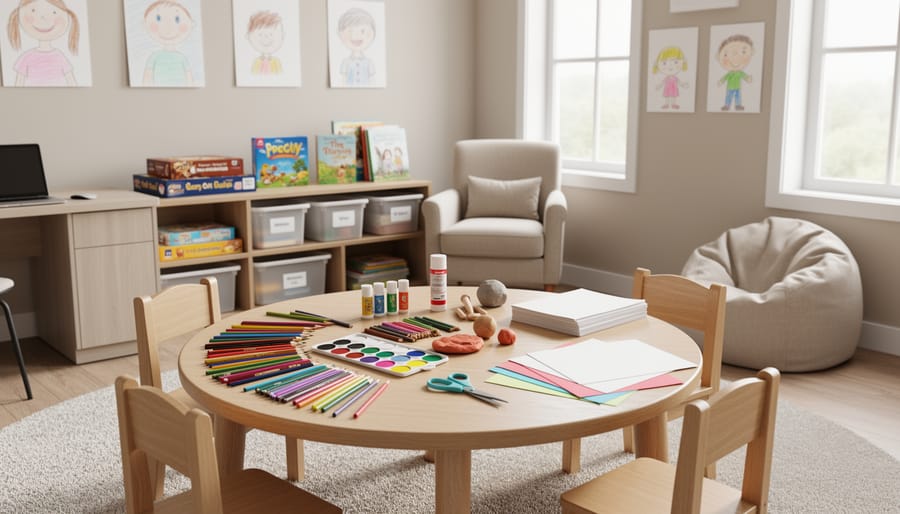
In a typical art therapy session, children engage with creative materials in a safe, non-judgmental space where making art becomes the primary language. A trained art therapist provides age-appropriate supplies, clay, paint, markers, collage materials, or digital tools, and invites the child to create freely or respond to gentle prompts. There’s no pressure to produce “good” art or explain feelings in words right away. Instead, the child expresses what’s happening inside through color, shape, and form.
The therapist observes how the child approaches materials, what themes emerge in their work, and how their creative choices shift over time. A child who scribbles aggressively in black might be releasing anger they can’t yet name. Another who carefully builds miniature worlds in sand trays might be working through feelings of control after a traumatic event. The therapist doesn’t impose fixed interpretations but explores the work alongside the child, asking curious questions like “Tell me about this part” or “What happens next in your picture?” This collaborative approach helps children discover their own insights and build self-awareness at their own pace.
For younger children especially, art therapy offers concrete benefits that traditional talk therapy can’t match:
- Bypasses the need for advanced verbal skills or emotional vocabulary
- Makes abstract feelings visible and therefore easier to manage
- Provides a natural outlet for big emotions that feel overwhelming
- Reduces anxiety by focusing hands and mind on a calming activity
- Builds confidence and self-esteem through creative accomplishment
The approach works equally well in person or through online art therapy where children create at home with guidance via video session. Many therapists integrate art therapy and mindfulness practices, teaching children to focus attention on the sensory experience of creating, the texture of paint, the rhythm of drawing, which naturally quiets anxious thoughts.
Children who’ve struggled to engage in traditional counseling often thrive in art therapy because it meets them where they already are: curious, imaginative, and comfortable learning through doing rather than talking.
Making Mental Health Care Affordable and Accessible
Cost shouldn’t stand between a child and the mental health support they need. In Belleville, families have genuine options that remove the most common barriers preventing children from getting help.
Children’s Mental Health Services eliminates the financial obstacle completely, their counseling, therapy, and support programs are free and confidential for all children, youth, and families in Hastings and Prince Edward counties. No insurance required, no sliding scale to navigate, no applications for funding. This removes what many parents cite as their biggest concern when considering mental health care.
Transportation and scheduling create their own challenges, especially for rural families or parents juggling multiple jobs. The shift to flexible service delivery addresses this directly. Virtual sessions mean a child can connect with their therapist from home, eliminating travel time and the stress of getting to appointments. Community-based care brings services into familiar settings, schools, community centers, places children already go, reducing disruption to family routines and making support feel less clinical, more natural.
Alternative approaches like affordable art therapy offer another pathway that works around traditional barriers. These sessions often provide flexible scheduling, including evenings and weekends, and can help children de-stress effectively through creative expression rather than sitting in a formal counseling office. For families who’ve struggled with wait times elsewhere or have children who don’t connect with traditional talk therapy, this accessibility matters.
The combination of free traditional services and affordable complementary options creates a safety net. When one approach has limitations, whether that’s wait times, location, or fit for your child’s needs, another avenue remains open. This isn’t about choosing between services; it’s about building a support system that actually works for your family’s reality.
What to Look for When Choosing the Right Support
Choosing the right mental health support for your child starts with understanding what they truly need. A five-year-old experiencing anxiety after a family change requires different support than a thirteen-year-old struggling with peer relationships or trauma. Consider your child’s age, their comfort with expressing feelings verbally, and whether they’ve responded well to structured environments or prefer more open-ended exploration.
Start by asking potential providers specific questions. How do they typically work with children in your child’s age group? What does a typical session look like? How will they involve you as a parent in the process? If your child struggles with traditional talk therapy, ask whether they incorporate play, art, or movement. Children’s Mental Health Services in Belleville offers multiple delivery options, in-person, virtual, and community-based, so ask which format might work best for your family’s schedule and your child’s comfort level.
- Observe your child’s reaction after the first two or three sessions. Do they seem more relaxed, or are they resistant to attending?
- Watch for small changes in behavior at home, improved sleep, fewer meltdowns, or new coping mechanisms they’re trying on their own.
- Check whether the therapist communicates clearly with you about progress and adjusts their approach based on what’s working.
- Notice if your child begins to open up more about their feelings, even outside of sessions.
If progress stalls after several weeks, that’s not failure. It might mean trying a complementary approach. A child who finds traditional counseling difficult might thrive with art therapy alongside their regular sessions, or a different modality might click better. Trust your instincts as a parent. You know your child best, and the right fit should feel collaborative, responsive, and genuinely supportive of your child’s unique way of processing the world.
Taking the First Step Today
If you’ve read this far, you’re already taking the first step. Recognizing that your child needs support and actively seeking information shows tremendous strength and love, not weakness or failure as a parent.
You have real options in Belleville right now. Children’s Mental Health Services accepts referrals directly, you don’t need a doctor’s note or diagnosis to reach out. Call their Belleville office or visit their website to start the intake process, which currently takes about a week. The service is completely free and confidential, removing the financial barrier that stops many families from getting help.
While you’re waiting for that initial appointment, or if your child needs something different than traditional talk therapy, consider exploring art therapy as a complement or alternative. Many children open up through creative expression when words feel too hard or scary. Art therapy offers a gentle entry point that feels less clinical and more natural for young minds.
The key is starting now rather than waiting for things to get worse. Early intervention makes a measurable difference in outcomes. Your child doesn’t need to be in crisis to deserve support, and you don’t need to have everything figured out before reaching out.
Trust your instincts. If something feels off with your child’s mood, behavior, or wellbeing, that concern alone is reason enough to explore support options. The professionals at Children’s Mental Health Services can help you determine the right level and type of care, and they’ll work with you to create a plan that fits your family’s needs and your child’s unique personality.
Finding mental health support for your child in Belleville doesn’t have to be overwhelming or out of reach. The improvements in 2026, particularly the reduced wait times at Children’s Mental Health Services, mean families can access help when they need it most. With approximately one week from initial contact to intake assessment, the barrier of waiting months has been significantly reduced in the region.
You have real choices now. Traditional counseling through the Lead Agency provides free, confidential support with in-person, virtual, and community options. If your child struggles with talk therapy or you want to supplement their care, alternative approaches like art therapy offer accessible ways to help children process emotions through creative expression.
The most important step is reaching out early. Children who receive support when challenges first emerge develop stronger coping skills, better emotional regulation, and greater resilience. Whether your child is experiencing anxiety, depression, behavioral concerns, or simply needs someone to talk to, support exists in your community.
Trust your instincts as a parent. If you sense something is wrong, seeking help is not an overreaction, it’s an investment in your child’s future wellbeing. Mental health matters as much as physical health, and both traditional and creative therapies can provide the healing and growth your child deserves.
