

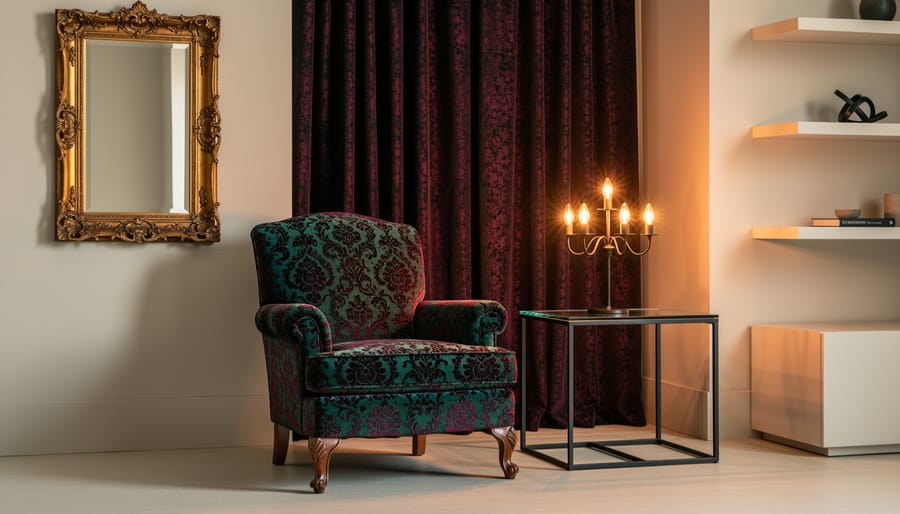
Modern Victorian interior design blends the ornate elegance of 19th-century Victorian style with the clean lines, functional layouts, and comfort of contemporary living. Instead of choosing between moody period drama and minimalist modernity, this hybrid approach lets you layer jewel tones, luxurious drapery, and dramatic lighting with sleek furniture and modern metallics. The result is a space that feels both richly textured and refreshingly livable.
This design trend matters because it offers something rare: permission to embrace visual complexity without sacrificing the breathing room modern life demands. If you’ve ever loved the romance of Victorian architecture but worried it would feel stuffy or overwhelming, this style shows you don’t have to pick a side. You can mix a velvet brocade armchair with a glass coffee table, pair ornate mirrors with streamlined shelving, or choose bold wallpaper for one accent wall while keeping the rest neutral.
For those who use their homes as a creative outlet and a way to de-stress at home modern Victorian design becomes a form of accessible self-expression. You’re curating a space that reflects both history and personal identity, balancing grandeur with intimacy. The layering process itself can be therapeutic: selecting which Victorian elements speak to you, deciding where to pull back, and watching your rooms transform into something entirely your own.
This article will walk you through what defines modern Victorian style, how its core elements work together, the specific components you can introduce room by room, and practical ways to implement this look in your own space without needing a mansion or a designer budget.
What Modern Victorian Interior Design Means
Modern Victorian interior design takes the rich, ornate character of Victorian-era homes and reimagines it through a contemporary lens. Instead of recreating a period room wholesale, this style picks and chooses: you might pair a velvet tufted sofa with a glass coffee table, or hang dramatic crystal lighting above minimalist furniture. The result feels layered and intentional rather than cluttered or museum-like.
The Victorian era, spanning 1837 to 1901, gave us heavy drapery, intricate woodwork, jewel-toned wallpapers, and rooms packed with furniture and decorative objects. Modern design, by contrast, prizes clean lines, open space, and functional simplicity. Modern Victorian design sits in the productive tension between these impulses. It keeps the emotional warmth and visual interest of Victorian aesthetics while stripping away the excess that can make spaces feel cramped or hard to live in.
- Victorian Era Design
- Interior style from 1837-1901 characterized by ornate details, rich colors, heavy textiles, and layered decoration that reflected wealth and craftsmanship.
- Modern Design Principles
- Contemporary approach emphasizing clean lines, functional furniture, minimalism, and open spaces that prioritize comfort and usability.
- Hybrid Design Style
- Combining elements from different periods or aesthetics to create a personalized space that balances contrasting qualities like richness and restraint.
This balance matters for more than just looks. Spaces that mix drama with restraint can feel both stimulating and restful, offering visual interest without overwhelming the senses. When you surround yourself with textures, colors, and objects you’ve chosen deliberately, your home becomes an extension of your identity rather than a neutral backdrop. That act of curation, of making aesthetic choices that reflect who you are, supports emotional well-being in the same way any creative practice does. You’re not just decorating. You’re building an environment that holds and expresses parts of yourself.
How Modern Victorian Design Creates Atmosphere
The Role of Drama and Restraint
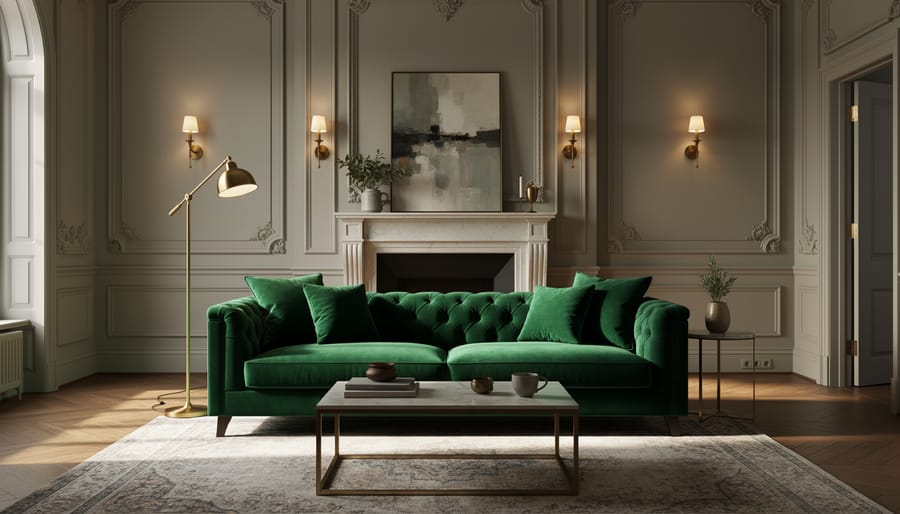
Modern Victorian design walks a careful line between showstopping impact and livable calm. The drama comes from deliberate focal points: a vintage crystal chandelier over a dining table, emerald velvet curtains pooling at the floor, or a deep sapphire accent wall behind a sleek modern sofa. These statement pieces anchor the room emotionally, creating the richness and visual weight that Victorian interiors are known for.
Restraint enters through editing and spacing. Rather than filling every surface with ornament, modern Victorian interiors leave breathing room. A single brocade armchair becomes a jewel in an otherwise minimal seating arrangement. Luxurious drapery frames windows without competing against patterned wallpaper and layered textiles everywhere else. The key is choosing one or two dramatic elements per room and keeping the rest simple, clean-lined, and functional.
This balance prevents overwhelm while preserving emotional warmth. You get the comfort of wrapping yourself in beauty without the visual clutter that can make Victorian-heavy spaces feel oppressive. The restraint lets the drama register as intentional self-expression rather than decorative chaos, creating an environment that feels both expressive and genuinely restful.
Mixing Furniture Across Eras
The easiest entry point is pairing a Victorian-inspired piece with modern basics. Start with a tufted velvet armchair in a jewel tone, emerald or sapphire, and place it beside a sleek contemporary sofa in a neutral fabric. The contrast highlights both: the ornate chair becomes a statement rather than clutter, while the modern piece keeps the room livable.
Balance proportions deliberately. Victorian furniture tends toward curves, carvings, and visual weight; modern pieces favor clean lines and lighter profiles. If you choose a heavy Victorian dining table with turned legs, surround it with minimalist Eiffel-style chairs or molded plastic seats. The mix creates rhythm instead of competition.
Don’t match eras in every corner. Commit to one or two Victorian anchors per room, a carved mirror, an upholstered bench, a claw-foot side table, then let everything else stay contemporary. This prevents the space from feeling like a museum or a confused mashup. The Victorian elements should feel intentional, not accidental, and they work best when modern pieces give them breathing room and functional support.
Key Elements of Modern Victorian Interiors
Color and Light: Jewel Tones and Dramatic Fixtures
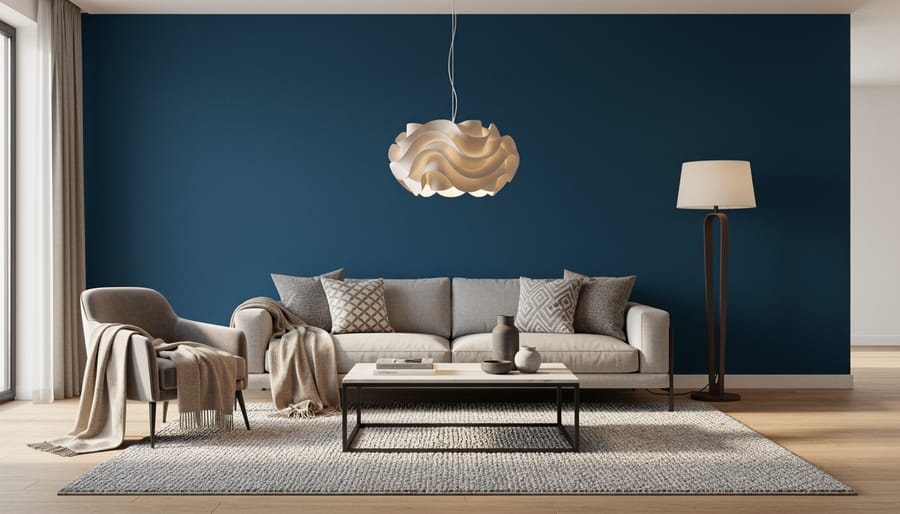
Jewel tones transform modern Victorian spaces from pretty to powerful. Deep emerald greens, rich sapphire blues, and burgundy reds create visual depth while triggering emotional responses, green promotes calm, blue inspires contemplation, red energizes without overwhelming. In modern Victorian design, these saturated colors work best as intentional accents: a sapphire velvet sofa against neutral walls, emerald curtains framing a window, ruby throw pillows on a charcoal sectional.
Lighting amplifies this effect. Statement fixtures, a crystal chandelier, an oversized pendant with brass detailing, vintage-inspired sconces, become sculptural focal points that command attention. The interplay between dramatic lighting and jewel-toned surfaces creates shifting moods throughout the day: morning light makes emerald fabrics glow, evening warmth deepens ruby accents into near-black shadows. This controlled drama lets you dial intensity up or down depending on your needs, making spaces feel protective and intimate or expansive and energizing.
Textiles and Materials: Brocade, Drapery, and Modern Metallics
Victorian fabrics carried weight and opulence, heavy velvets, intricate brocades, tasseled drapery that pooled on floors. Modern Victorian design borrows that richness but edits ruthlessly. Instead of upholstering an entire room in brocade, try a single statement armchair in deep emerald or burgundy brocade, letting its pattern and texture stand alone against a neutral sofa. Window treatments offer another measured opportunity: floor-length velvet or damask curtains in jewel tones frame windows dramatically without competing for attention when the rest of the room stays clean-lined.
The modern counterbalance comes through metallics. Brushed brass curtain rods, matte black picture frames, or polished chrome table lamps temper Victorian fabric drama with contemporary restraint. These metallic finishes feel current and architectural, grounding luxurious textiles so they read as intentional choices rather than museum recreations. Mix textures deliberately, a brocade cushion on a linen sofa, silk drapes beside matte-painted walls. This layering creates visual interest and emotional warmth without tipping into excess. The goal is sensory richness that feels curated, where each luxurious material earns its place by adding comfort and beauty to your daily environment.
Furniture Fusion
Start with one statement piece and build around it. A tufted Victorian settee upholstered in deep velvet gains contemporary edge when paired with a sleek glass coffee table and minimalist side chairs. The contrast highlights both styles instead of competing with them.
Scale matters more than matching. A modern low-profile sofa works beautifully alongside an ornate Victorian accent chair because they occupy different visual weights in the room. Place the dramatic piece where it becomes a focal point, beside a window, flanking a fireplace, then surround it with clean-lined modern furniture that gives the eye places to rest.
Mix materials deliberately. Victorian carved wood pieces feel less heavy when combined with modern metal frames, acrylic accents, or contemporary upholstery in solid colors rather than period patterns. A Victorian dining table with modern upholstered chairs in linen or leather creates functional seating while preserving visual interest.
Function guides every choice. That ornate Victorian armchair works in a reading nook; the streamlined modern sofa handles daily family use. Avoid filling a room with antique-style pieces that sacrifice comfort for aesthetics. The modern elements should do the practical work, storage, seating for gatherings, surfaces for everyday living, while Victorian accents add character and emotional resonance to the space.
How to Create a Modern Victorian Home
You don’t need a complete room makeover or a big budget to start building a modern Victorian space. Begin with one room or even one corner that you use daily, somewhere you’ll notice the emotional impact of your design choices. Your bedroom, living room, or a reading nook makes a strong starting point because these spaces directly affect your daily comfort and mood.
Start by choosing a single Victorian-inspired anchor piece. This could be a velvet armchair in emerald or sapphire, an ornate mirror with a gilded frame, or dramatic curtains in a rich fabric. Let this piece set the tone, then build around it with modern elements that provide balance. If your anchor is a heavily detailed Victorian-style coffee table, pair it with a clean-lined modern sofa. If you start with jewel-toned drapery, keep your larger furniture pieces simple and contemporary.
Work with what you already own before buying new items. Look at your existing furniture with fresh eyes. A modern sectional can anchor a room while you add Victorian touches through smaller investments like brocade throw pillows, a vintage-style table lamp with dramatic presence, or metallic picture frames in brass or copper finishes. This approach keeps costs manageable and lets you test the style before committing fully.
Consider your lighting next, since it transforms atmosphere more powerfully than almost any other element. Replace one standard fixture with something that makes a statement: a chandelier with crystal details for your dining area, or wall sconces with ornate metallic finishes in your hallway. Dramatic lighting creates the emotional depth that defines this style, and it works in small spaces just as effectively as large ones.
For room-by-room implementation, bedrooms benefit most from luxurious textiles. Add a velvet headboard, heavy curtains in jewel tones, or a brocade armchair in one corner. Keep bedding itself simple and modern. In living spaces, mix your sofa styles or combine a Victorian-inspired accent chair with contemporary seating. Kitchens and bathrooms can incorporate the aesthetic through metallic fixtures, dramatic pendant lights, or small doses of pattern in window treatments.
Unlike purely calming interior design approaches that prioritize simplicity throughout, modern Victorian style creates emotional resonance through controlled drama. Paint one accent wall in a deep jewel tone rather than repainting entire rooms. This gives you the richness and visual interest without overwhelming your space or your budget. The goal is creating an environment that feels personally meaningful and supports your well-being, not achieving magazine-perfect rooms.
Where Modern Victorian Design Works Best
Modern Victorian design thrives in rooms where you naturally linger and seek comfort. Bedrooms respond especially well to this aesthetic, since the layered textiles, jewel tones, and dramatic lighting create a cocoon-like atmosphere that supports rest and emotional retreat. Living rooms also suit the style beautifully, offering space for the furniture fusion and statement pieces that define the look without overwhelming daily function.
In apartments and smaller homes, the style scales down gracefully when you focus on one or two signature elements per room rather than attempting full Victorian opulence. A single brocade armchair paired with modern seating, or dramatic lighting against otherwise neutral walls, delivers the aesthetic impact without crowding limited square footage. Rental spaces benefit from this restraint, too, since you can introduce the style through movable furniture, textiles, and lighting rather than permanent architectural changes.
High-ceilinged spaces amplify the drama inherent in modern Victorian design, but standard ceiling heights work equally well when you direct attention horizontally through layered textures and carefully chosen focal points. The key is intentionality. Choosing which Victorian elements to emphasize and where to exercise modern restraint becomes a form of art therapy mindfulness a deliberate process of shaping your environment to reflect what genuinely supports your well-being rather than chasing a prescriptive aesthetic template. This style works best wherever you want your space to feel both expressive and nurturing, where beauty serves emotional comfort rather than display.
The Therapeutic Value of Intentional Design
Creating a space that reflects who you are isn’t just about aesthetics, it’s an active form of self-care. When you choose jewel-toned velvet for your reading chair or hang dramatic lighting above your dining table, you’re making decisions that shape how you feel every day. Research confirms that art therapy benefits mental health and designing your home functions similarly, it’s environmental art therapy you practice by living in it.
Modern Victorian design particularly supports well-being because it encourages intentionality. You can’t create this style by accident or through rushed shopping trips. Selecting which Victorian elements matter to you, deciding where restraint serves you better than drama, and balancing ornate pieces with clean modern lines requires genuine reflection about what brings you comfort. That process alone has therapeutic value.
The visual richness of this style also creates emotional anchors throughout your home. A brocade armchair becomes more than furniture when you’ve deliberately chosen it to echo colors that calm you. Luxurious drapery isn’t frivolous when it transforms harsh morning light into the warm glow that helps you start your day feeling grounded. These aren’t superficial choices, they’re ways of design for well-being that acknowledge beauty and comfort as legitimate emotional needs.
Your space reflects your identity back to you. When it combines elements from different eras according to your preferences rather than rigid rules, it tells you that your unique perspective has value. That daily reinforcement matters more than design trends ever could.
Common Questions About Modern Victorian Interior Design
Understanding modern Victorian interior design can raise practical questions about implementation, especially when you’re working with real-world constraints like limited space or budget. These are the questions readers most commonly ask when considering this style.
What does “Victorian” mean in interior design?
Victorian refers to the design aesthetic popular during Queen Victoria’s reign (1837-1901), characterized by ornate details, rich colors, layered textiles, and decorative embellishments. In modern Victorian design, these historical elements are selectively incorporated rather than fully recreated.
How do I avoid making a modern Victorian space feel cluttered or overwhelming?
The key is restraint: choose one or two dramatic Victorian elements per room (like a statement chandelier or brocade armchair) and balance them with clean-lined modern furniture and negative space. Stick to a cohesive color palette and avoid covering every surface with pattern or ornament.
What fabrics work best for modern Victorian interiors?
Luxurious fabrics like brocade, velvet, and heavy drapery are signature Victorian choices, but use them in smaller doses, a single armchair, window treatment, or throw pillow. Pair these rich textiles with modern materials like linen or cotton to maintain contemporary balance.
Can modern Victorian design work in a small apartment?
Yes, scale is everything. In smaller spaces, focus on one statement Victorian piece (an ornate mirror, jewel-toned accent chair, or dramatic light fixture) and keep surrounding elements minimal and modern to prevent the room from feeling cramped.
The beauty of modern Victorian design lies in its flexibility. You’re not recreating a period room or following strict historical accuracy. Instead, you’re selecting elements that resonate with you personally and combining them in ways that support how you actually live. A small dose of Victorian drama can transform a neutral modern space without requiring a complete renovation or overwhelming your square footage.
Start with what draws you to the style. If it’s the rich colors, introduce jewel tones through paint or textiles. If it’s the ornate details, one decorative mirror or chandelier can anchor a room. The modern framework keeps the space functional and livable while the Victorian touches add personality and emotional warmth.
Modern Victorian interior design isn’t about recreating a museum or spending a fortune on antiques. It’s about making deliberate choices that bring beauty, comfort, and personal meaning into your everyday environment. By blending the emotional richness of Victorian aesthetics with the practicality of contemporary living, you create spaces that feel both expressive and livable, rooms that support your well-being rather than just existing as backdrops.
The process itself matters as much as the result. Choosing a jewel-toned velvet pillow, hunting for the right vintage mirror, or deciding where to place dramatic lighting are all acts of creative expression. They’re small, tangible ways to shape your surroundings according to your own vision and needs. This kind of intentional design can function as ongoing self-care, giving you agency over an environment that nurtures rather than drains you.
Start small if the whole concept feels overwhelming. Add brocade curtains to one room. Mix a Victorian-style chair with your modern sofa. Experiment with emerald or sapphire accents. Your home should reflect who you are and how you want to feel, and modern Victorian design offers a flexible, accessible framework for building that connection.
