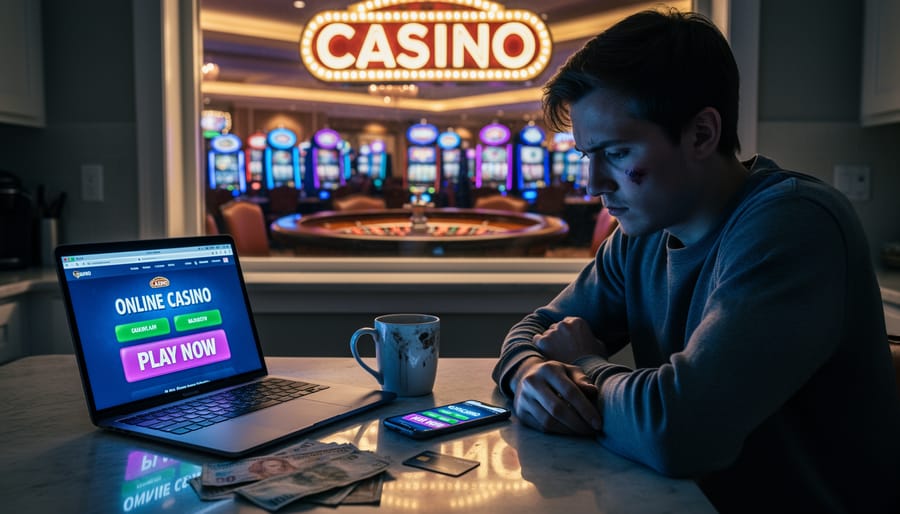
The scroll becomes muscle memory—refreshing betting sites, chasing losses, convincing yourself the next spin will be different. When crypto slots with highest RTP start feeling less like entertainment and more like an escape you can’t control, traditional therapy might feel overwhelming or judgmental. But there’s another path forward that doesn’t require sitting across from a stranger dissecting your every decision.
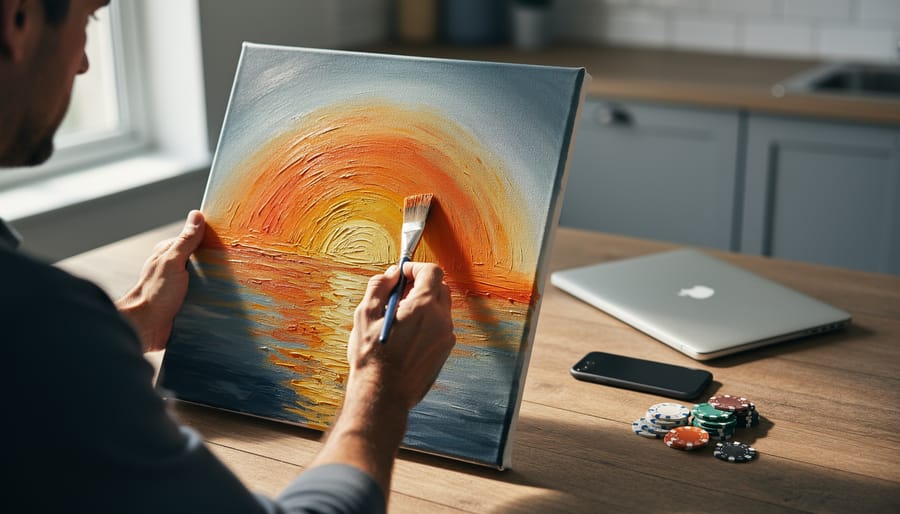
Art therapy offers something different: a way to process the shame, anxiety, and compulsive patterns driving your gambling through creative expression instead of just talking. You don’t need artistic talent or experience. Through painting, drawing, sculpting, or collage, you’ll externalize the feelings that keep pulling you back to those betting apps—the ones that are hard to name but impossible to ignore.
This approach works because gambling addiction isn’t just about money or willpower. It’s about what you’re trying to feel or escape when you place that bet. Art therapy helps you understand those triggers without forcing immediate verbal explanations, making it especially valuable if you’ve tried traditional counseling and felt stuck or defensive.
Whether you’re ready to quit completely or just starting to acknowledge there’s a problem, art therapy provides affordable, accessible support that meets you where you are. You can begin this journey in group settings, one-on-one sessions, or even through guided exercises at home—no prior art experience required.
Why Online Gambling Addiction Is Different (And Harder to Quit)
If you’re struggling to quit online gambling, you’re not fighting the same battle as someone dealing with traditional casinos or betting shops. Online gambling creates a completely different set of challenges, and understanding why it’s so hard to stop can help you feel less alone in this struggle.
The biggest difference? Online gambling never closes. There’s no last call, no security escort, no physical boundary between you and the next bet. Whether it’s 3 PM or 3 AM, those apps and websites are right there in your pocket or on your laptop. You don’t need to get dressed, drive anywhere, or face another human being. This constant availability means your brain never gets a natural break from temptation.
Then there’s the privacy factor. When you gamble online, there’s no dealer watching your losses pile up, no concerned friend noticing you’ve been at the slots for hours. This isolation can feel safe at first, but it actually makes the addiction stronger. Without external reality checks, it’s easier to lose track of time, money, and the severity of the problem. Many people describe feeling like they’re living a double life, which adds shame and makes reaching out for help feel even more difficult.
Online platforms also create an illusion of control that traditional gambling doesn’t offer. You can set limits, track your stats, and convince yourself you’re being strategic. But these features are designed to keep you engaged longer, not to help you stop. The algorithms, bonuses, and near-miss animations are all carefully crafted to trigger your brain’s reward system in ways that physical casinos simply can’t match.
If you’ve tried to quit and found it incredibly difficult, that’s not a personal failing. You’re up against technology specifically designed to be addictive, operating in an environment with virtually no natural stopping points. Recognizing these unique challenges is the first step toward finding approaches that actually work for this modern form of addiction.
What Art Therapy Actually Is (No, You Don’t Need to Be an Artist)
Let’s clear up the biggest myth right away: art therapy isn’t about making pretty pictures or being “good at art.” Seriously, you could draw stick figures the entire session and still get profound therapeutic benefits. If you’re feeling anxious about your artistic abilities (or lack thereof), take a deep breath. That worry actually proves you’re thinking about art therapy the wrong way.
Think of art therapy as using materials like paint, clay, or markers as another language to express what’s happening inside you. When you’re caught in the cycle of online gambling, there are feelings and thoughts that are incredibly hard to put into words. Maybe it’s the rush before placing a bet, the crushing shame afterward, or the complex mix of excitement and dread that keeps pulling you back. These experiences live somewhere deeper than language can easily reach.
That’s where art therapy comes in. Instead of sitting across from a therapist trying to find the perfect words to describe your struggle, you might be working with colors, shapes, or textures. The process of making something with your hands creates a different pathway to understanding yourself. You’re not creating museum-worthy art; you’re creating a conversation starter between you and your feelings.
Here’s how it differs from traditional talk therapy: in regular counseling, words are your only tool. You describe what happened, how you felt, what you’re thinking. It’s valuable, but it can feel limiting, especially when discussing something as emotionally charged as gambling addiction. Online art therapy adds another dimension. Your hands are busy, which can actually make it easier to open up. The art becomes a safe buffer, something to focus on when emotions feel too intense to face directly.
Your therapist isn’t judging your artistic technique. They’re interested in what you chose to create, what colors spoke to you, what the process felt like. The messiness, the unexpected outcomes, even the frustration of materials not cooperating—all of it becomes material for healing. The art itself is simply a vehicle for self-discovery and expression, not the destination.
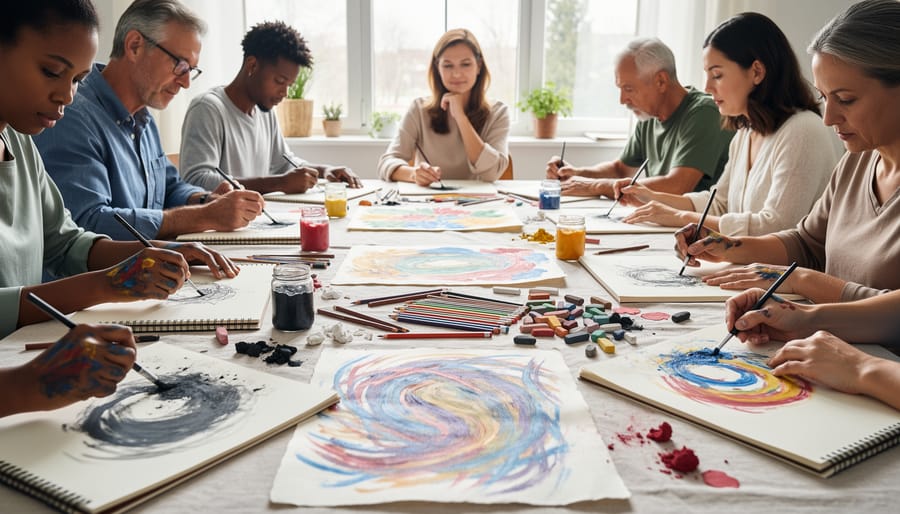
How Art Therapy Targets the Root Causes of Gambling Addiction
Processing Emotions You Can’t Put Into Words
Sometimes the hardest parts of gambling addiction aren’t about the money lost or the time wasted. They’re about feelings that sit heavy in your chest but refuse to come out in words. That gnawing emptiness when you’re not playing. The crushing shame after another session. The anxiety that makes your hands shake until you log back in.
These emotions often drive the cycle of addiction, yet trying to talk about them in traditional therapy can feel impossible. How do you explain a feeling you don’t fully understand yourself?
This is where art therapy creates something powerful. When you’re working with paint, clay, or collage, you’re not trying to find the “right” words. Your hands take over, and somehow what you create reflects what’s happening inside. A dark swirl might capture that spiral of anxiety. Jagged lines might express the chaos you feel. Empty spaces on the page might finally give shape to that hollow feeling gambling temporarily fills.
Art therapy for gambling addiction recognizes that processing difficult emotions doesn’t always happen through conversation. Your artwork becomes a bridge between what you feel and what you can eventually understand and address. There’s no judgment about artistic skill, and there’s no pressure to explain yourself before you’re ready.
Many people find that once they’ve expressed these buried emotions visually, talking about them becomes easier. The art gives you something concrete to point to and say, “This is what it feels like.”
Breaking the Cycle of Intrusive Thoughts and Urges
When you’re caught in gambling addiction, your mind can feel like it’s on a never-ending loop. The urges come in waves, the thoughts feel impossible to silence, and that craving for the next bet can consume your entire day. Your brain has learned to expect those dopamine hits, and it doesn’t want to let go easily.
This is where creative expression becomes a powerful ally. When you engage in art-making, whether it’s painting, sculpting, or even simple doodling, you’re giving your brain something else to focus on. The repetitive motions of brushwork, the concentration required to mix colors, or the tactile experience of working with clay all demand your attention in the present moment. This naturally interrupts those compulsive thought patterns that keep pulling you back to gambling websites.
The connection between art therapy and mindfulness is particularly helpful here. Creating art grounds you in the now, making it harder for intrusive thoughts to take over. You’re focused on what’s happening on the canvas or in your hands, not what’s happening on a betting app.
Here’s the thing your brain still needs: stimulation and reward. But instead of getting those feelings from gambling, art offers a healthier alternative. Completing a piece, seeing colors blend in unexpected ways, or solving creative problems all trigger similar reward responses without the devastating financial and emotional consequences. You’re essentially rewiring your brain to find satisfaction in creation rather than destruction.
Rebuilding Your Sense of Self and Control
Gambling addiction can chip away at your sense of self, leaving you feeling powerless and disconnected from who you really are. When every decision revolves around the next bet, it’s easy to lose sight of your values, interests, and identity. Art therapy offers a gentle way to reclaim these lost pieces of yourself.
Creating art puts control back in your hands. Unlike gambling, where outcomes are unpredictable and often disappointing, art gives you complete agency over what you create. You choose the colors, the materials, the direction. There’s no house edge, no rigged system. Every brushstroke or pencil mark is yours alone, reminding you that you can make decisions that aren’t dictated by urges or algorithms.
This process helps rebuild self-worth that addiction damages. When you complete a piece, no matter how simple, you’ve accomplished something real and tangible. You’re not just the person who gambled away money or broke promises. You’re someone who creates, who has talents and interests beyond gambling screens. This shift in self-perception is powerful and healing.
Art therapy also helps you rediscover what brings you genuine joy. Maybe you forgot you loved working with your hands, or that colors and textures once excited you. These rediscoveries connect you with authentic parts of yourself that existed before gambling took over, and they’ll remain long after you’ve moved past addiction. You’re not starting from scratch; you’re reconnecting with someone who’s been there all along.
Developing Healthier Coping Strategies
One of the most valuable gifts art therapy offers is teaching you practical ways to handle stress, boredom, and those moments when gambling feels like the only option. Instead of white-knuckling through cravings or trying to distract yourself until the urge passes, art therapy gives you something tangible to do with your hands and your emotions.
When you feel that familiar pull toward gambling sites, having healthier coping strategies makes all the difference. Drawing, painting, or sculpting becomes a go-to response rather than logging into your betting account. These activities aren’t just distractions either. They actively calm your nervous system and help process whatever’s driving that urge, whether it’s anxiety, loneliness, or the need for excitement.
Art therapy teaches you to recognize your triggers and respond differently. Maybe you typically gamble when stressed about money or after a difficult day at work. Through creative expression, you learn to channel those feelings into something constructive. Over time, reaching for your sketchbook becomes as automatic as reaching for your phone once was.
What makes these strategies sustainable is that they’re genuinely enjoyable. You’re not forcing yourself through another breathing exercise you find boring. You’re creating something, even if it’s messy or imperfect. That sense of accomplishment and self-expression fills the void that gambling used to occupy.
The skills you develop in art therapy sessions transfer to everyday life. You’ll have a toolbox of techniques ready whenever challenging emotions arise. Some people keep art supplies in their car or workspace for quick access. Others schedule daily creative time as preventive self-care. These practices become lifelong resources for managing stress without destructive behaviors.
What to Expect in Art Therapy Sessions for Gambling Addiction
Walking into your first art therapy session can feel uncertain, but knowing what to expect helps ease those nerves. These sessions are designed to feel comfortable and judgment-free, nothing like a formal medical appointment.
Most art therapy sessions for gambling addiction start with a simple check-in conversation. Your therapist will ask how you’re feeling and what’s been on your mind lately. There’s no pressure to dive into heavy topics immediately. The goal is creating a safe space where you can express yourself honestly.
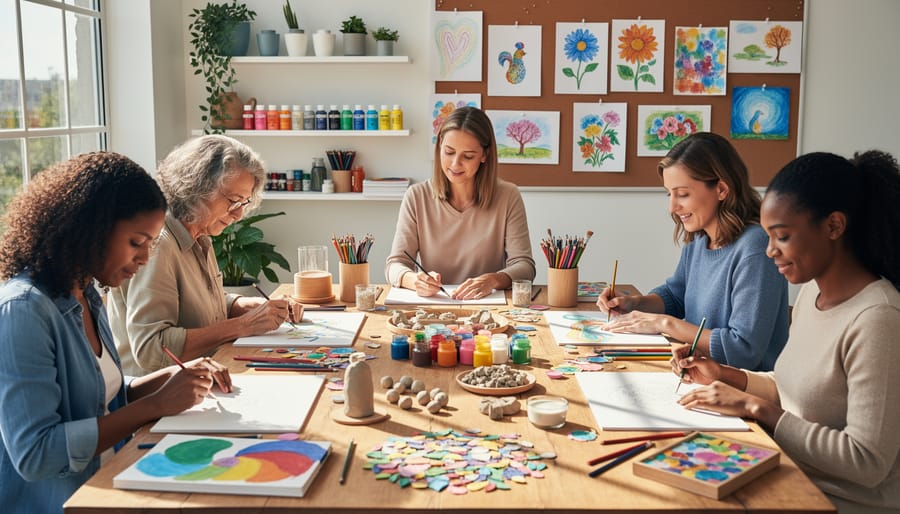
Then comes the creative part, which is often more relaxed than people imagine. You might work with colored pencils, paint, clay, collage materials, or even digital art tools. Your therapist will suggest activities based on where you are in your recovery journey. For example, early sessions might involve creating a visual timeline of your gambling patterns to help you identify triggers and emotional patterns you hadn’t noticed before.
One common exercise involves drawing or painting your feelings without thinking too much about the outcome. This isn’t about artistic skill at all. Someone might scribble angry red lines to represent the frustration they feel after a gambling episode, while another person might create a collage showing their life before and after gambling took over.
As you create, your therapist observes and asks gentle questions. They might notice you’ve used dark colors and ask what emotions those represent. Or they might point out how your artwork shows isolation, opening a conversation about loneliness that might be fueling your gambling urges. These insights often surface naturally through the art, making them less confronting than direct questioning.
Sessions typically last 50 to 90 minutes, giving you enough time to settle in, create, and discuss what emerged. Some therapists incorporate mindfulness exercises at the beginning or end to help ground you.
Throughout the process, your therapist guides you toward recognizing patterns, understanding your emotional triggers, and developing healthier coping strategies. They might introduce art-based homework between sessions, like keeping a visual journal where you sketch instead of gamble when urges strike.
The beauty of art therapy is that you’re actively doing something during sessions rather than just talking. This hands-on approach often feels more manageable and less intimidating, especially if traditional talk therapy hasn’t worked for you before.
Online Art Therapy: Recovery from Your Own Space
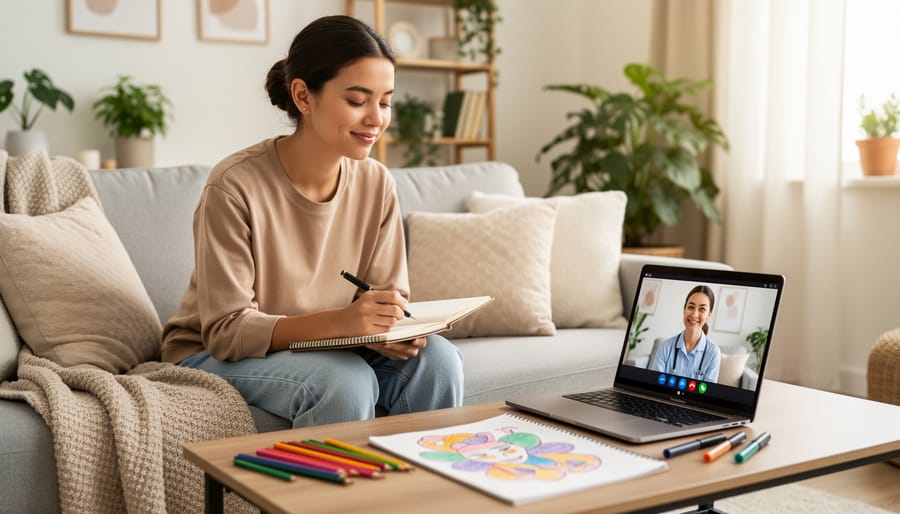
Here’s something that might surprise you: recovery doesn’t always require sitting in a therapist’s office. Virtual art therapy brings healing directly into your own space, making it easier than ever to start your journey away from gambling addiction.
Think about it. No commute, no waiting rooms, no worried glances from people you might know. Online sessions let you work through your feelings in the comfort and privacy of your home. This matters especially when you’re dealing with something as personal as gambling addiction. You can express yourself freely without the anxiety of traveling to appointments or running into familiar faces.
The practical benefits are huge, too. Virtual sessions typically cost less than traditional office visits, and you save money on transportation. Plus, scheduling becomes way more flexible. Have a break between work meetings? Log in from your kitchen table. Feeling overwhelmed late in the evening? Many online therapists offer extended hours that fit real life.
You might wonder if online therapy works as well as meeting face-to-face. Research shows that virtual therapy can be just as effective for addiction recovery. The art-making process itself carries the healing power, whether you’re creating in a therapist’s office or at your own dining table. Your therapist still guides you, still helps you process emotions, and still provides the support you need.
The key difference? Online art therapy removes barriers that might have stopped you from seeking help in the first place. And sometimes, starting from your own safe space makes taking that first step toward recovery feel less scary.
Taking the First Step: How to Start Art Therapy
Taking the first step toward healing takes courage, and if you’re reading this, you’ve already begun. Finding the right art therapist doesn’t have to feel overwhelming. Start by searching for credentialed art therapists through the Art Therapy Credentials Board or the American Art Therapy Association’s therapist locator. Many therapists now offer online sessions, which can be especially helpful if you’re dealing with online gambling addiction and prefer the comfort of your own space.
When searching for a therapist, look for someone who has experience with addiction or specifically mentions gambling issues in their practice. During initial consultations, which many therapists offer for free, ask about their approach and whether they’ve worked with gambling concerns before. Trust your gut—finding someone you feel comfortable with matters more than checking every box.
Worried about cost? You have options. Some therapists work on sliding scale fees based on your income. Check if your health insurance covers art therapy under mental health benefits. Community mental health centers often provide art therapy at reduced rates, and some nonprofit organizations offer free or low-cost group art therapy sessions for people dealing with addiction.
Before your first session, know that you don’t need any artistic talent or experience. Come as you are. Your therapist will guide you through everything. You might want to jot down a few thoughts about what brings you to therapy and what you hope to gain from it, but even that’s optional.
Remember, seeking help isn’t a sign of weakness—it’s one of the strongest things you can do for yourself. You deserve support, and art therapy could be the compassionate, creative pathway toward recovery you’ve been looking for.
Recovery from online gambling addiction isn’t a straight line, and that’s completely okay. Some days will feel easier than others, and that’s part of the journey. What matters is that you’re here, considering options and taking steps toward healing. Art therapy offers a creative, judgment-free space where you can explore what’s happening beneath the surface without needing to have all the answers right away.
You don’t have to navigate this alone. Whether you’re just beginning to recognize the signs or you’ve been struggling for a while, support is available in forms that might feel more comfortable and accessible than you think. Art therapy can work alongside other treatments or serve as your starting point. There’s no single “right way” to heal.
If you’re feeling ready, consider reaching out to a therapist who understands both addiction and creative approaches. Many offer sliding scale fees or online sessions, making support more accessible. Your story isn’t over, and recovery is possible. Taking that first step, even if it feels small or uncertain, is brave. You deserve support, compassion, and the chance to rediscover yourself beyond the screen.
